The search landscape has undergone a profound transformation with the emergence of AI-powered search engines. As we navigate through 2025, traditional SEO strategies are being redefined by intelligent systems that understand user intent beyond keywords. The rise of Perplexity, SearchGPT, and Google AI Overview has created both challenges and opportunities for businesses striving to maintain visibility. This comprehensive guide explores how these AI search engines function, their impact on organic traffic, and the strategies necessary to optimize your content effectively. By understanding the semantic capabilities of these platforms and adapting your approach accordingly, you can position your brand for success in this new era of search.
The Evolution of Search with AI Engines
The search engine landscape has undergone a remarkable transformation since the introduction of advanced AI models into search functionality. What began as simple algorithm adjustments has evolved into complete AI-powered search ecosystems that fundamentally change how users discover information online. Traditional search engines like Google have gradually integrated AI capabilities through updates like RankBrain, BERT, and MUM, but 2025 marks a watershed moment with fully AI-native search experiences becoming mainstream alternatives to conventional search1.
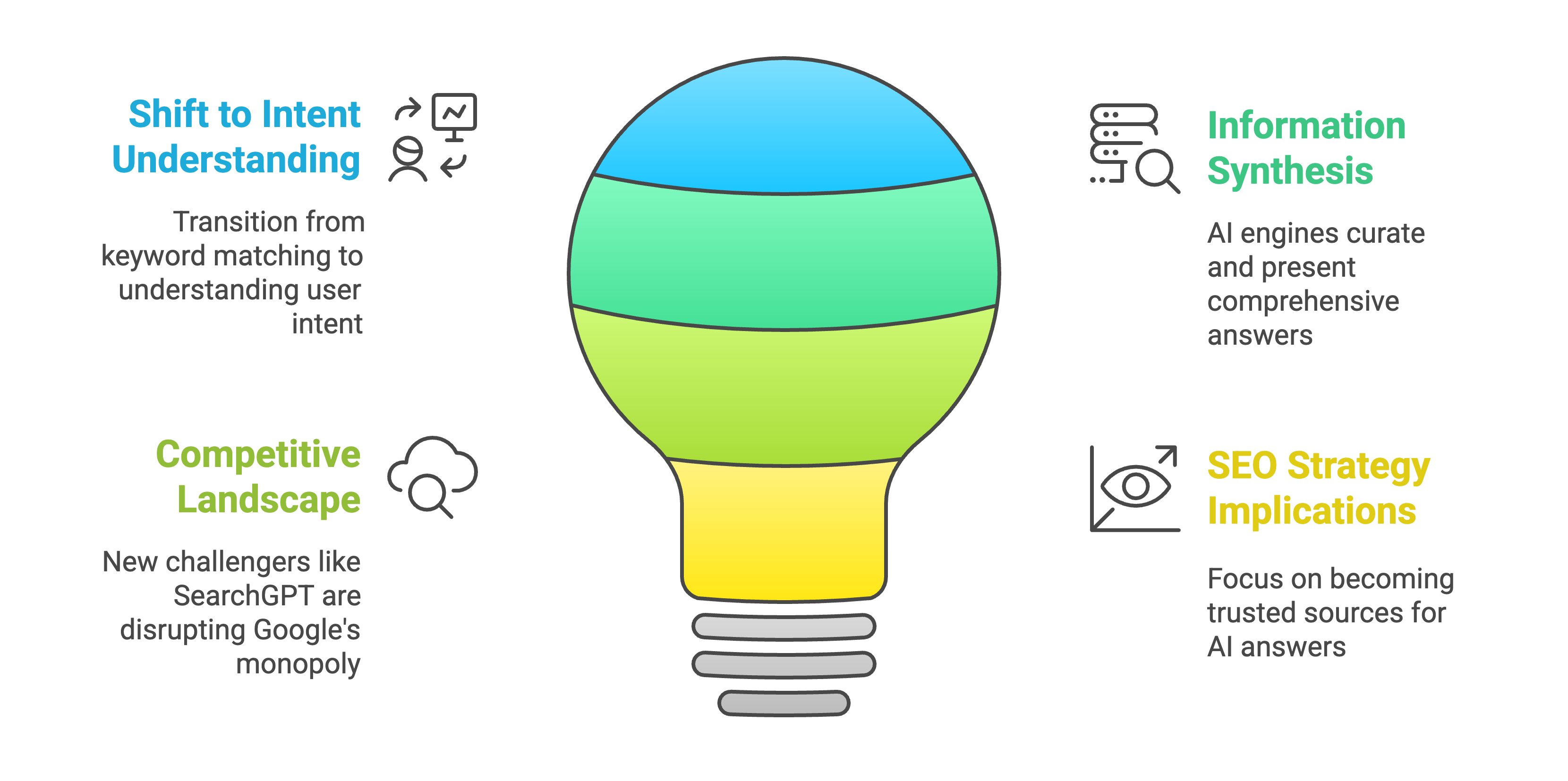
The most significant change in this evolution is the shift from keyword-matching to intent understanding. Earlier search engines primarily matched websites to user queries based on keyword density and backlink profiles. However, today’s AI search engines like Perplexity, SearchGPT, and Google AI Overview demonstrate sophisticated natural language understanding that comprehends context, nuance, and user intent. This development has accelerated the trend toward conversational search, where users interact with search engines through complete questions or statements rather than abbreviated keyword phrases.
Another transformative aspect of AI search engines is their ability to synthesize information from multiple sources. Unlike traditional search engines that simply rank and display websites, AI-powered alternatives actively curate information from trusted sources and present comprehensive answers directly in the search interface. This functionality represents a fundamental shift from search engines acting as directories to becoming answer engines that directly fulfill user information needs. The implications for website owners are profound, as users increasingly find complete answers without needing to click through to source websites.
The competitive landscape has also evolved dramatically. Google’s long-standing monopoly on search is facing its first serious challenge in decades. OpenAI’s SearchGPT represents a genuine alternative approach that has gained significant traction since its limited release in late 2024. Rather than attempting to replicate Google’s approach, SearchGPT leverages OpenAI’s advanced language models to create an entirely different search experience focused on conversation and direct answers. Meanwhile, specialized AI search engines like Perplexity have carved out niches by offering domain-specific expertise and unique features that appeal to particular user segments.
For businesses and content creators, this evolution necessitates a fundamental rethinking of visibility strategies. The traditional focus on ranking web pages at the top of search results becomes less relevant when AI engines directly answer queries. Instead, becoming a trusted source that AI engines reference when generating their answers becomes the primary goal. This requires demonstrating topical authority, creating comprehensive content clusters, and establishing credibility through expertise, authoritativeness, and trustworthiness signals that AI systems can recognize and evaluate.
Major AI Search Engines Defining 2025
The AI search engine landscape of 2025 is dominated by several key players, each bringing unique capabilities and approaches to information retrieval. Understanding the distinct characteristics of these platforms is essential for developing effective optimization strategies tailored to each environment.
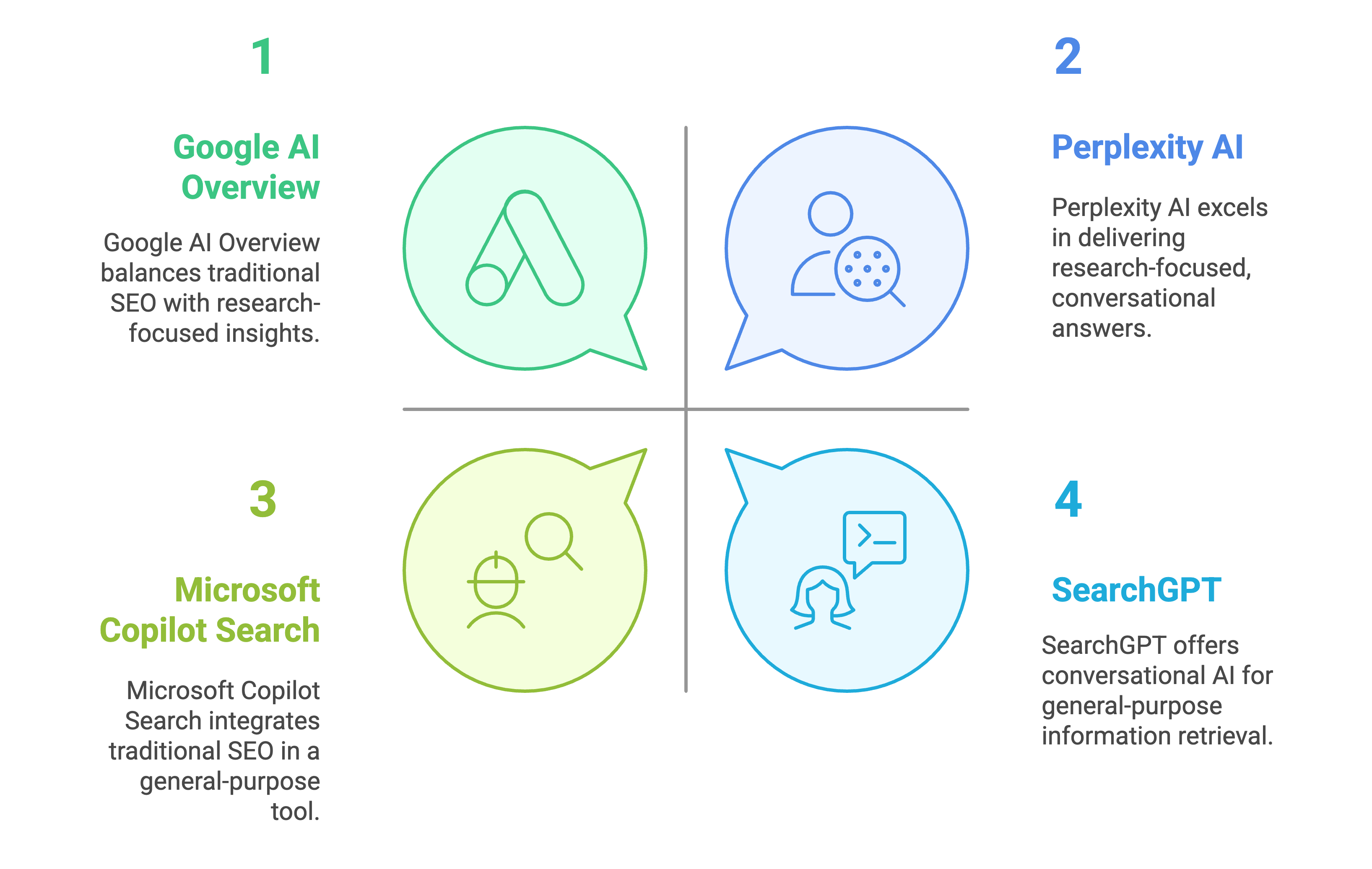
Google AI Overview (formerly Google SGE) represents Google’s ambitious attempt to maintain its search dominance in the AI era. After initial challenges with its Search Generative Experience launched in 2023, Google rebranded and refined the system to better balance AI-generated answers with traditional search results. The platform now uses Google’s Gemini models to generate comprehensive overviews while still directing users to source websites. This hybrid approach aims to preserve Google’s advertising business model while incorporating AI capabilities. For businesses, Google AI Overview remains crucial due to Google’s continued market dominance, particularly in Europe where adoption of alternative AI search engines has been slower.
SearchGPT emerged as Google’s most formidable challenger when OpenAI released it to the general public in late 2024. Built on OpenAI’s advanced GPT-4o architecture, SearchGPT combines conversational capabilities with real-time information retrieval. Unlike traditional search engines, SearchGPT focuses on delivering comprehensive, conversational answers rather than lists of links. The platform has gained significant market share, particularly among younger, tech-savvy users who appreciate its natural interface and ability to handle complex, multi-part queries. SearchGPT’s rapid adoption has forced the entire search industry to accelerate innovation and rethink fundamental assumptions about user search behavior.
Perplexity AI has carved out a substantial niche as a research-focused AI search engine. Rather than attempting to be a general-purpose search platform, Perplexity excels at delivering in-depth answers with citations and references. Its specialized approach to information retrieval prioritizes academic and authoritative sources, making it particularly popular among researchers, students, and professionals seeking comprehensive information on specific topics. Perplexity’s emphasis on source attribution and transparency has also helped it build credibility in an environment where concerns about AI hallucinations and misinformation are prevalent.
Microsoft’s Copilot Search represents the evolution of Bing, leveraging Microsoft’s partnership with OpenAI to create a search experience deeply integrated with the Windows ecosystem. The platform combines traditional web search with generative AI capabilities, offering users a blend of conventional results and AI-synthesized answers. Microsoft has positioned Copilot Search as a productivity tool rather than just an information retrieval system, emphasizing features that help users complete tasks rather than simply find information.
Each of these major AI search engines employs different methodologies for ranking and presenting information. Google AI Overview continues to rely heavily on traditional SEO signals like backlinks and content quality, but increasingly factors in user engagement metrics and content depth. SearchGPT places greater emphasis on semantic understanding and topical comprehensiveness, often preferring fewer high-quality, authoritative sources over numerous shallow mentions. Perplexity prioritizes recency, academic credentials, and citation networks when evaluating sources. These varying approaches necessitate tailored optimization strategies rather than a one-size-fits-all approach to AI search engine optimization.
How AI Search Engines Select and Evaluate Content
Understanding the selection criteria used by AI search engines is fundamental to optimizing content effectively in 2025. Unlike traditional search engines that primarily relied on keywords and backlinks, AI-powered platforms employ sophisticated methods to evaluate content quality, relevance, and trustworthiness before determining which sources to reference in their answers.
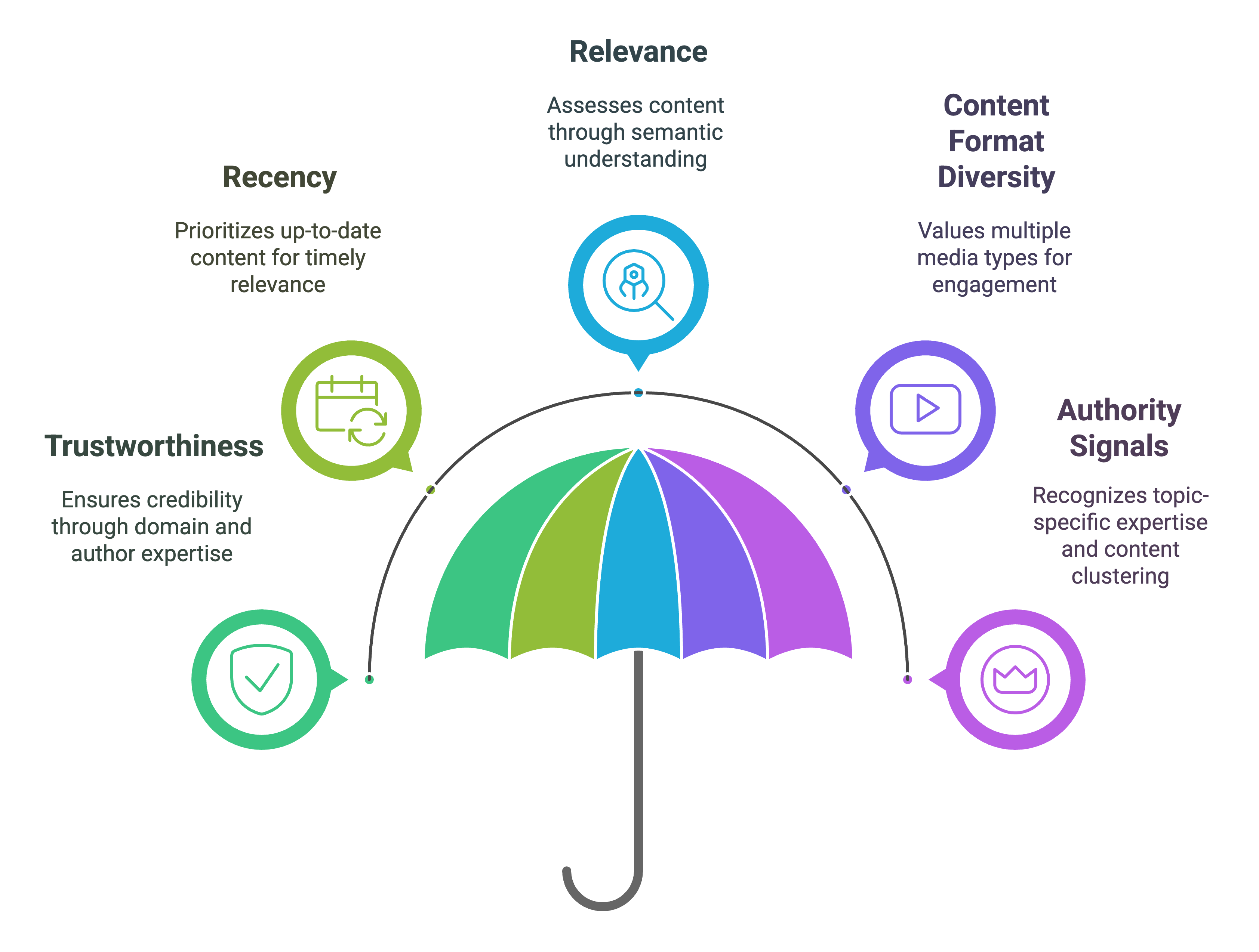
Trustworthiness stands as the cornerstone criterion for all major AI search engines. Perplexity AI, for instance, maintains a carefully curated list of trusted domains across various industries rather than attempting to index the entire web. This approach ensures that information comes from credible sources with established reputations. The evaluation of trustworthiness extends beyond domain authority to include factors such as the author’s expertise, citation patterns, and the presence of factual inaccuracies. Content that demonstrates subject matter expertise through depth, precision, and proper sourcing receives preferential treatment in AI search results.
Recency has become increasingly important in AI search engine algorithms. With the acceleration of information cycles, AI engines prioritize up-to-date content, particularly for queries where timeliness matters. Perplexity specifically emphasizes fresh information and regularly reindexes sources to ensure currency. This preference for recent content applies unevenly across topics—while technology news requires constant updates, foundational scientific concepts may remain relevant despite their age. Content creators must establish appropriate update schedules based on their subject matter to maintain visibility in AI search results.
The relevance assessment performed by AI search engines goes far beyond simple keyword matching. Advanced natural language processing enables these platforms to understand context, intent, and nuance in both user queries and published content. SearchGPT, for example, can recognize that content about “repairing a dripping tap” is relevant to a query about “how to fix a leaking faucet” even without exact keyword matches. This semantic understanding requires content creators to focus on comprehensive topic coverage rather than keyword density. AI engines evaluate how thoroughly content addresses all aspects of a topic, including potential questions, exceptions, and edge cases.
Content format diversity has emerged as another critical factor in AI search engine evaluation. Perplexity shows a clear preference for sources that offer multiple content formats, particularly favoring websites that combine textual information with embedded videos. This multi-format approach allows AI engines to cross-reference information across different media types and provide users with the option to consume content in their preferred format. Content creators who offer information in diverse formats—text, video, images, and interactive elements—gain advantages in AI search visibility.
Authority signals have evolved beyond traditional domain metrics to include topic-specific expertise indicators. AI search engines can recognize when a source consistently publishes high-quality content in a particular niche and assign it greater weight for related queries. This development has led to the increasing importance of content clustering—organizing related content into interconnected topic hubs that collectively demonstrate deep expertise in specific areas. Content creators who develop comprehensive topic clusters with clear hierarchical relationships between content pieces are more likely to be recognized as authoritative sources by AI engines.
The Rise of Zero-Click Searches and Its Impact on Organic Traffic
The proliferation of AI search engines has dramatically accelerated the already concerning trend of zero-click searches. In traditional search environments, zero-click searches occurred when users found the information they needed directly on the search results page—often through featured snippets or knowledge panels—without clicking through to any website. With AI search engines, this phenomenon has reached unprecedented levels, fundamentally altering traffic patterns and challenging traditional SEO metrics.
A 2024 study highlighted in Elocos’ research revealed that 60% of searches on traditional search engines already ended without a click on the search results page. After conducting an initial search in Europe, 22% of users proceeded to make a new search, while 37% abandoned their search journey entirely. These figures underscore the growing reality that search engines were evolving from discovery tools into answer engines even before the widespread adoption of AI search technology. The introduction of comprehensive AI-generated responses has only intensified this shift, with preliminary data suggesting that click-through rates from AI search engines may be 30-40% lower than from traditional search results.
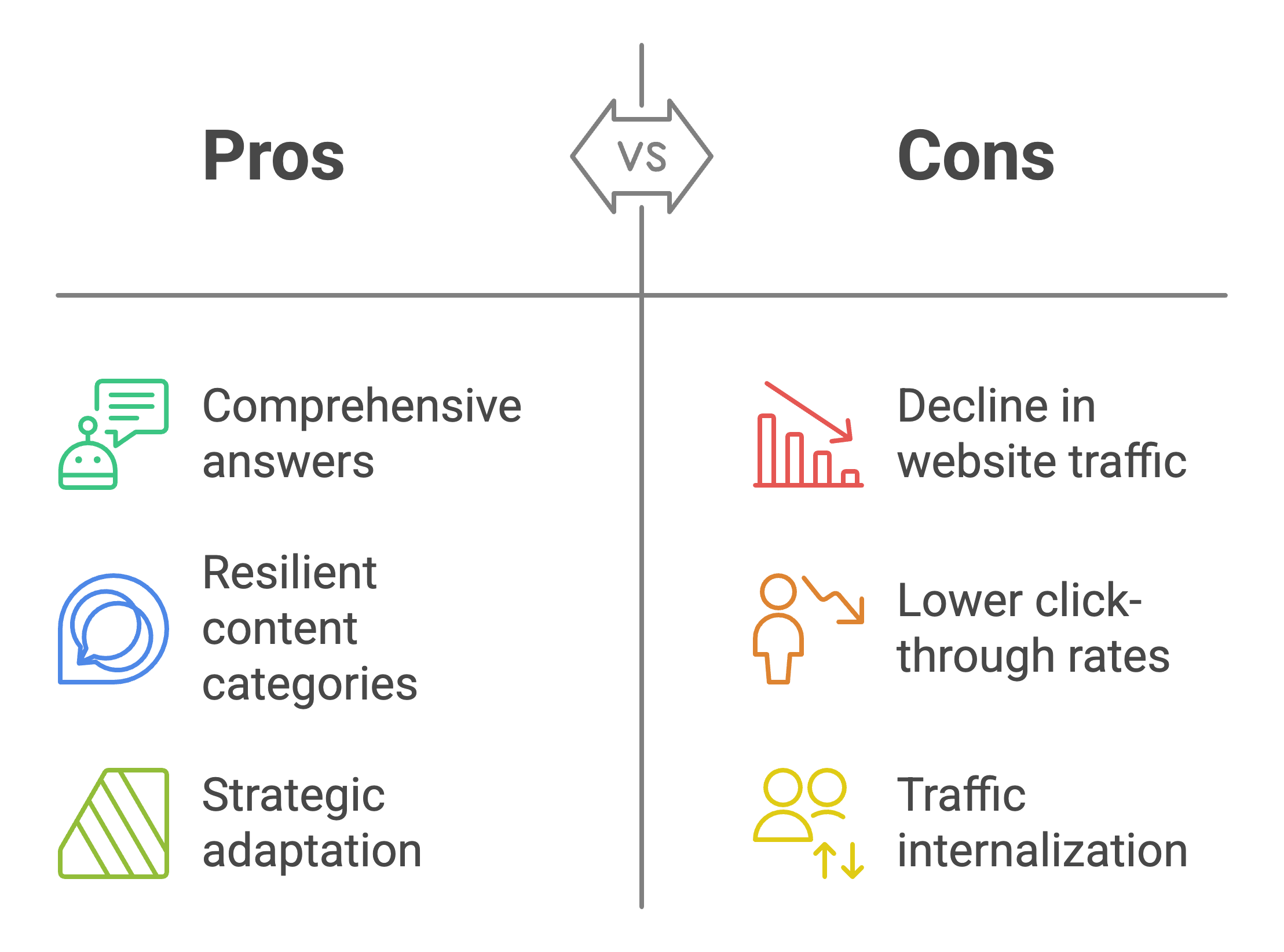
The implications for website traffic are profound and multifaceted. Websites previously reliant on informational queries to drive top-of-funnel traffic are experiencing significant declines in visitor numbers. For instance, dictionary sites, general knowledge resources, and basic how-to content providers have seen double-digit percentage drops in organic traffic as AI search engines directly provide definitions, explanations, and instructions without requiring users to visit source websites. This traffic redistribution has forced content creators to recalibrate their expectations and metrics for success in the AI search era.
Another concerning dimension is the increasing percentage of clicks that remain within the search engine ecosystem. Google’s data indicates that approximately 30% of clicks from search results go to Google-owned properties like Google News, Google Finance, Google Maps, and other integrated services. This pattern of traffic internalization appears to be replicating across other AI search platforms as well, with both Perplexity and SearchGPT expanding their ecosystems to include specialized verticals that keep users within their platforms. The result is a shrinking pool of available traffic for independent websites, requiring strategic adaptation from content publishers.
Despite these challenges, certain content categories have proven more resilient to the zero-click trend. Complex topics requiring in-depth explanation, specialized technical content, and subjects with significant nuance or controversy continue to generate clicks as users seek more comprehensive information than AI-generated summaries can provide. Similarly, transactional and commercial content maintains stronger click-through rates as users progress toward purchase decisions. Content creators are increasingly focusing on these resilient categories while reconsidering their approach to basic informational content that AI engines can easily synthesize.
Adaptation strategies have emerged in response to these changing traffic patterns. Some publishers are embracing the role of becoming authoritative sources that AI engines reference, focusing less on direct traffic and more on having their information and perspectives included in AI-generated answers. Others are developing content specifically designed to encourage clicks even after users read AI summaries—offering unique data, proprietary insights, or specialized tools that complement rather than duplicate what AI engines provide. These strategies recognize that while the nature of search traffic is changing, opportunities remain for those willing to evolve their approach to visibility in the AI search era.
Optimizing Content for Semantic Understanding and Search Intent
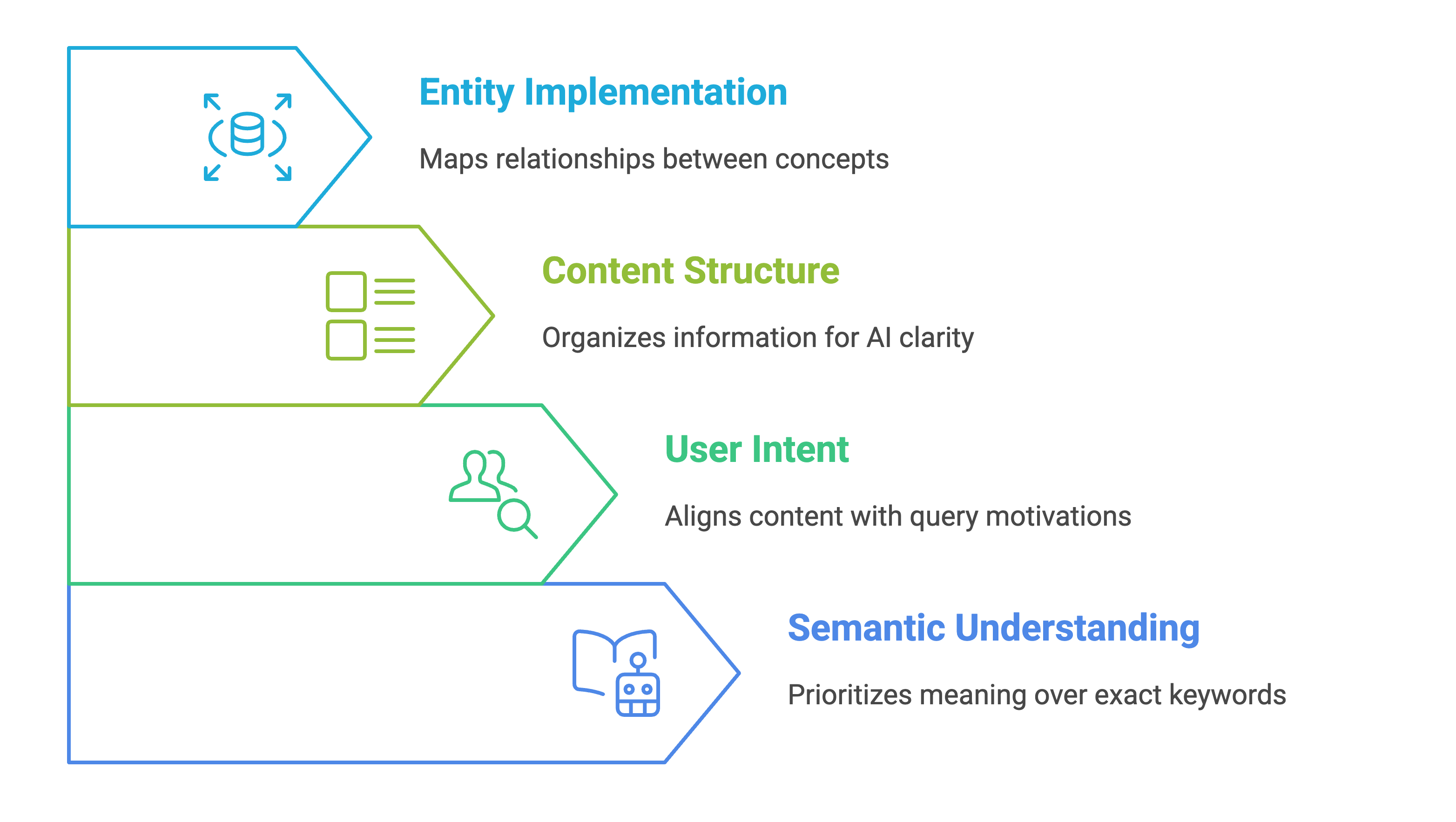
The shift from keyword-matching to semantic understanding represents one of the most fundamental changes in search engine technology. AI search engines like Perplexity, SearchGPT, and Google AI Overview employ sophisticated natural language processing to comprehend content in ways that closely mirror human understanding. This evolution necessitates a corresponding shift in content optimization strategies, moving from keyword-centric approaches to semantic content development focused on comprehensive topic coverage and intent fulfillment.
Semantic search prioritizes the meaning behind words rather than the exact keywords used. SearchGPT, for example, can recognize that content about “home plumbing repairs” is relevant to a query about “fixing a leaking faucet” even without exact keyword matches. This capability stems from training on vast corpora of text that enable language models to understand relationships between concepts, synonyms, and related terms. Content creators must therefore expand their thinking beyond specific keywords to encompass the broader semantic field surrounding their topics. This includes incorporating natural variations in terminology, related concepts, and contextual information that helps AI engines recognize the full scope of the content’s relevance.
The transformation of long-tail keyword strategies illustrates this shift clearly. Traditionally, SEO practitioners created separate pages targeting specific long-tail keyword variations—for example, “how to fix a leaking bathroom faucet” versus “repairing a dripping bathroom tap.” In the AI search environment, this approach becomes counterproductive. Rather than dispersing related information across multiple pages, successful content consolidates comprehensive coverage of a topic into robust, authoritative resources. SearchGPT rewards content that thoroughly addresses a range of related queries within a single, well-structured piece rather than fragmenting information across multiple thin pages.
Understanding user intent has become even more crucial in optimizing for AI search engines. These platforms categorize search queries with unprecedented precision, distinguishing between informational, navigational, transactional, and commercial investigation intents. Content that aligns perfectly with the dominant intent behind a query receives preferential treatment in AI search results. This alignment requires content creators to research the specific questions, concerns, and goals that motivate searches related to their topics. Techniques like analyzing “people also ask” sections, studying related queries, and leveraging AI tools to identify common questions can help content creators comprehensively address the full spectrum of user intent.
The structure and organization of content significantly impact how effectively AI search engines can extract and present information. Clear hierarchical organization with logical heading structures helps these platforms understand the relationships between different sections of content. Similarly, the use of structured data markup provides explicit signals about content types, from how-to instructions to product information, enabling more accurate interpretation. Content creators should prioritize clarity and logical progression in their information architecture to facilitate semantic understanding by AI engines.
Implementation of entities—people, places, things, concepts, and their relationships—has become increasingly important for semantic optimization. AI search engines build knowledge graphs that map connections between entities, and content that accurately represents these relationships gains advantages in relevance assessment. Including precise entity information, proper names, specific terminology, and clear explanations of relationships between concepts helps AI engines correctly contextualize content within broader knowledge frameworks. This entity-based approach represents a significant advancement from keyword-focused optimization, requiring content creators to think in terms of concepts and relationships rather than isolated search terms.
The Growing Importance of Topical Authority and Content Clustering
In the AI search engine landscape of 2025, demonstrating comprehensive expertise in specific subject areas has become significantly more important than traditional domain authority metrics. This shift toward topical authority recognition has fundamentally changed how content strategies must be developed and implemented for optimal visibility in AI-powered search results.
Topical authority refers to a website’s demonstrated expertise and credibility within a specific subject area, as assessed by AI search engines. Unlike broad domain authority metrics that applied site-wide influence, topical authority is granular and subject-specific. A medical website might have strong topical authority for cardiology content but limited authority for dermatology topics. AI search engines like SearchGPT have become remarkably adept at evaluating this nuanced expertise, analyzing content depth, comprehensiveness, accuracy, and interconnectedness to determine which sources truly demonstrate mastery of a subject.
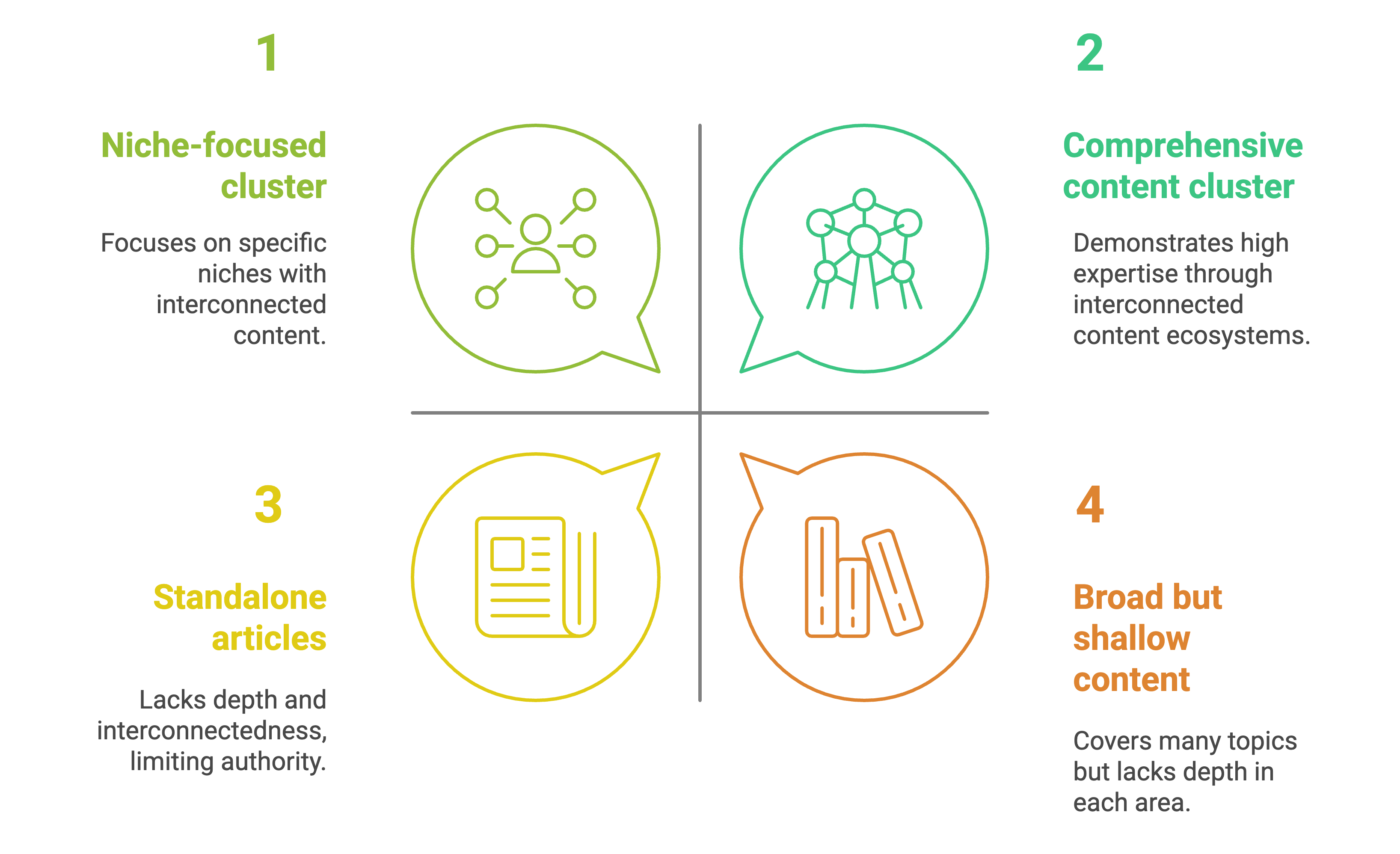
Content clustering has emerged as the primary strategy for building and demonstrating topical authority. This approach involves creating interconnected content ecosystems around central themes, with clear hierarchical relationships between pieces. A comprehensive content cluster typically includes a pillar page that broadly covers a main topic, surrounded by numerous cluster pages that explore specific aspects, questions, and related concepts in greater depth. These clusters are connected through strategic internal linking that establishes semantic relationships between content pieces and guides both users and AI crawlers through the logical organization of information.
The architecture of effective content clusters has evolved to match how AI search engines process and evaluate information. Rather than creating isolated pages optimized for individual keywords, successful content strategies now focus on coverage completeness—ensuring that all relevant aspects of a topic are thoroughly addressed within a cohesive content ecosystem. This approach aligns perfectly with how AI search engines evaluate content relevance, as they prioritize sources that provide comprehensive information rather than fragmentary coverage.
The semantic relationships between content pieces within a cluster carry significant weight in AI search evaluations. These relationships are established through multiple mechanisms: explicit internal linking with descriptive anchor text, consistent terminology and entity usage across related content, clear theme progression from general to specific topics, and metadata connections that signal content relationships. AI search engines analyze these signals to understand how individual content pieces contribute to a site’s overall expertise in a subject area.
Evidence suggests that content clusters provide cumulative benefits in AI search visibility. When AI search engines like Perplexity evaluate potential sources for inclusion in their answers, they consider not just the relevance of a single page but the broader context of expertise demonstrated across the site. A website with a robust, interconnected cluster of content addressing multiple dimensions of a topic is more likely to be recognized as an authoritative source than one with isolated, standalone articles—even if those individual articles are well-optimized. This cumulative effect creates a competitive advantage that isolated content strategies cannot match.
Implementing effective content clustering requires systematic topic research and gap analysis. Content strategists must identify the complete universe of relevant subtopics, questions, and related concepts surrounding their primary themes. AI tools have become invaluable for this process, helping to map conceptual relationships and identify content opportunities that human researchers might miss. This comprehensive mapping ensures that content clusters address the full spectrum of user interests and search intents, maximizing their potential relevance across diverse query types.
Technical SEO Strategies for AI Search Engine Optimization
While content quality and semantic relevance have gained prominence in AI search optimization, technical SEO fundamentals remain critical foundations for visibility in AI-powered search environments. In many ways, technical optimization has become even more important, as it provides the infrastructure that enables AI search engines to efficiently access, understand, and evaluate content quality.
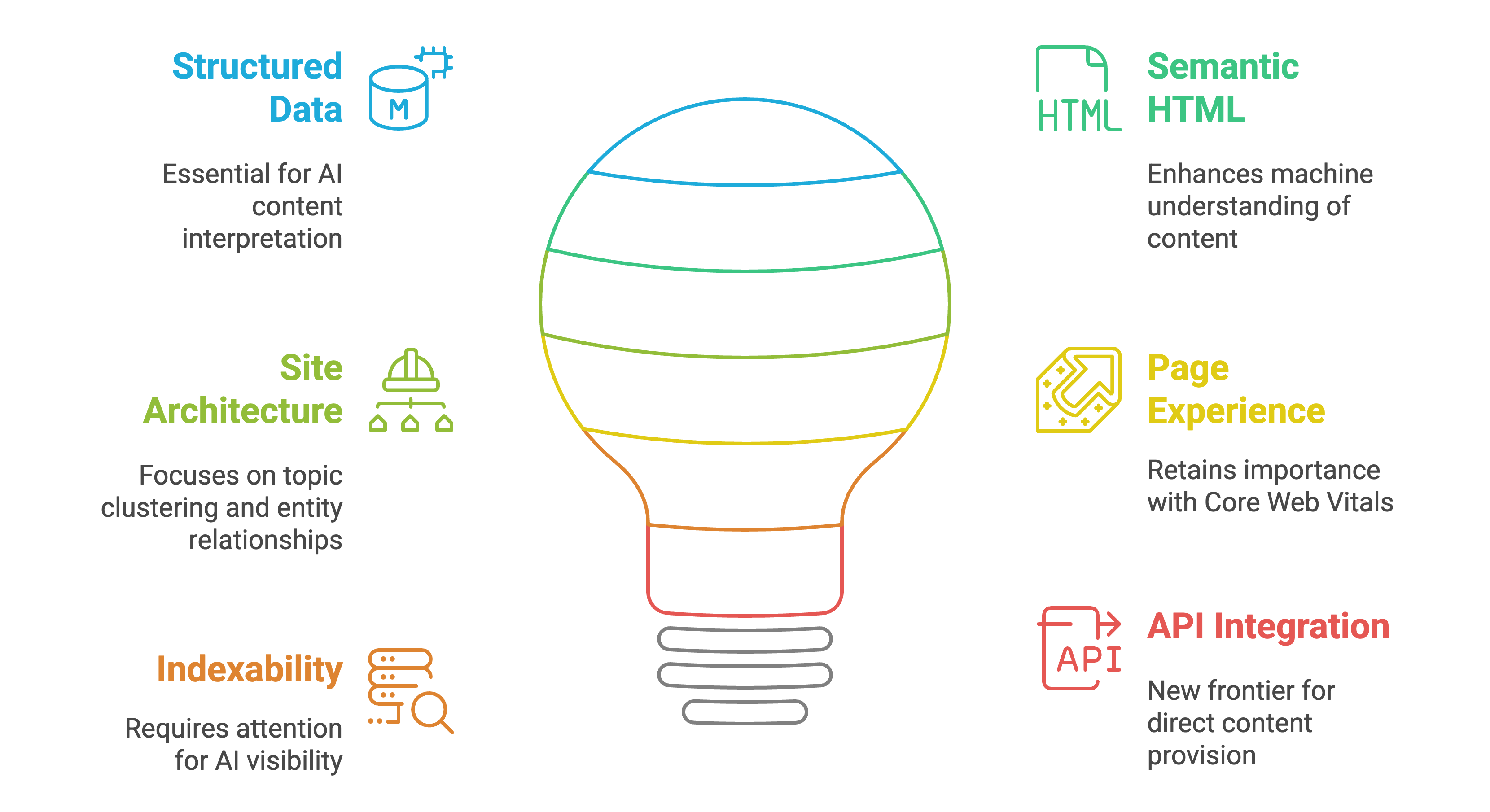
Structured data implementation has evolved from a recommended practice to an essential strategy for AI search optimization. JSON-LD schema markup provides explicit signals about content structure, purpose, and relationships that help AI engines accurately interpret and categorize information. Beyond basic schema types, advanced implementations that define content relationships, expertise signals, and content attributes have proven particularly valuable for AI search visibility. For example, using HowTo, FAQ, and Article schemas with comprehensive property definitions helps AI search engines extract specific information for direct answers while properly attributing the source.
The importance of semantic HTML structure has increased significantly with AI search engines. Proper use of header tags (H1-H6) in logical hierarchical order, descriptive title attributes, semantic HTML5 elements like <article>, <section>, and <aside>, and appropriate use of emphasis tags all contribute to machine understanding of content structure and importance hierarchies. AI search engines pay particular attention to these structural signals when determining the organization of information and identifying key passages for potential citation in search results.
Site architecture optimization focuses increasingly on topic clustering and entity relationships rather than traditional keyword silos. Technical implementations of content clusters require careful consideration of URL structures, internal linking patterns, and breadcrumb navigation that reflect semantic relationships between content pieces. Sites organized around clear topical hierarchies with logical URL structures (e.g., example.com/topic/subtopic/specific-concept) provide stronger signals of content relationships to AI search engines than flat architectures or keyword-optimized URL patterns.
Page experience metrics have retained their importance in AI search optimization, with some factors gaining even more significance. Core Web Vitals—especially Largest Contentful Paint (LCP) and Cumulative Layout Shift (CLS)—directly impact how efficiently AI crawlers can process content and extract meaning. Mobile responsiveness remains crucial as AI search engines prioritize content that provides consistent experiences across devices. Interstitials, excessive advertisements, and other elements that interfere with content accessibility can significantly reduce the likelihood of selection by AI search engines.
Indexability optimization requires special attention for AI search engine visibility. While traditional search engines like Google have well-established crawling and indexing patterns, newer AI search platforms may have different approaches to content discovery and freshness evaluation. Ensuring that XML sitemaps are comprehensive and frequently updated, implementing clear robots.txt directives, and monitoring crawl statistics across multiple search platforms have become essential practices. Some AI search engines like Perplexity place greater emphasis on content recency, making crawl frequency management particularly important for time-sensitive topics.
API integration capabilities have emerged as a new frontier in technical SEO for AI search engines. Several AI search platforms offer API access that allows websites to provide structured content directly to search engines, potentially increasing the likelihood of selection and accurate representation in search results. These integrations typically require implementing specific data structures and authentication protocols, but can significantly improve content visibility for compatible sites. As AI search platforms continue to evolve, these direct integration options are likely to become increasingly important for authoritative content providers.
Tools and Resources for Adapting Your SEO to the AI Era
The transition to AI-optimized search strategies requires specialized tools and resources designed specifically for this new paradigm. Fortunately, a robust ecosystem of solutions has emerged to help marketers analyze, optimize, and measure their performance in AI search environments.
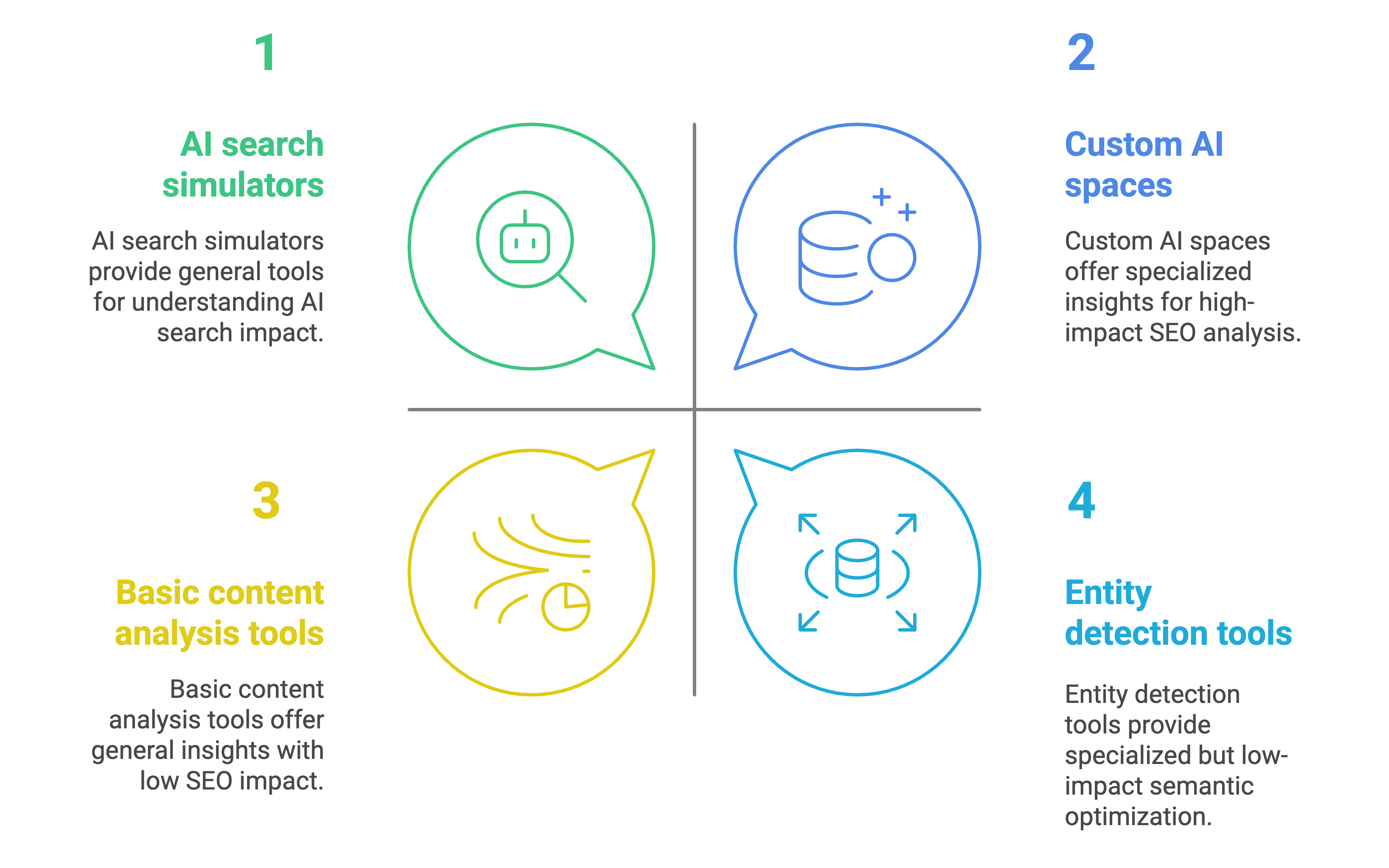
AI search simulators have become essential tools for understanding how content appears in AI-generated answers. These platforms allow marketers to test queries and analyze which sources are cited, how information is presented, and what factors appear to influence source selection. Perplexity’s API, SearchGPT’s developer tools, and third-party solutions like AI Search Analyst provide visibility into the black box of AI search algorithms. Regular testing with these simulators helps content creators identify optimization opportunities and track improvements over time. The detailed analysis of citation patterns across different query types is particularly valuable for understanding content gaps and competitive positioning.
Content analysis tools leveraging AI capabilities have revolutionized how marketers evaluate and optimize their material. These advanced platforms go beyond basic keyword analysis to provide semantic relevance scoring, topic comprehensiveness evaluation, and intent alignment assessment. Tools like the Detailed SEO Chrome Extension, highlighted in marketing strategist Deb Szabo’s tutorial, enable automated analysis of semantic structures and content completeness. These solutions help identify gaps in topic coverage, semantic relationships that need strengthening, and opportunities to improve content depth and authority signals.
Custom AI spaces in platforms like Perplexity have emerged as powerful resources for ongoing SEO analysis. As demonstrated in Deb Szabo’s approach, marketers can create specialized AI environments trained on their specific industry, competitors, and content ecosystem. These custom spaces provide more relevant and actionable insights than general-purpose AI tools, helping marketers understand their positioning within their specific competitive landscape. The ability to upload proprietary data and documents to these spaces further enhances their utility for specialized SEO analysis.
Entity detection and knowledge graph tools have become increasingly important as AI search engines emphasize entity relationships in their relevance assessments. These specialized solutions help content creators identify entities within their content, analyze how they’re connected, and optimize these relationships for better semantic understanding. By mapping content to standardized entity definitions and ensuring consistency in entity representation across a website, these tools help strengthen the semantic signals that AI search engines prioritize when evaluating content authority and relevance.
Search intent analysis platforms powered by machine learning provide unprecedented insight into the motivations behind user queries. These tools analyze search patterns, query variations, and user behavior to categorize search intent with remarkable precision. Understanding whether searches reflect informational, navigational, transactional, or commercial investigation intent helps content creators align their material with user expectations. This alignment is particularly crucial for AI search engines, which place greater emphasis on intent matching than traditional keyword relevance.
Technical SEO audit tools specifically designed for AI search optimization have evolved to evaluate factors beyond traditional technical SEO concerns. These specialized solutions assess structured data implementation quality, semantic HTML usage, content relationship signals, and other technical factors that influence AI search visibility. Regular audits with these tools help identify technical barriers to optimal representation in AI search results and prioritize improvements that will have the greatest impact on visibility.
Performance monitoring dashboards that track content performance across multiple AI search engines provide crucial visibility into changing search patterns. These tools track citation frequency, traffic from AI search platforms, and competitive positioning across different query types. The ability to segment performance by topic areas, query intents, and search platforms helps marketers identify successful strategies and areas needing improvement. As the AI search landscape continues to evolve rapidly, these monitoring capabilities are essential for agile strategy adaptation.
Measuring Success in AI Search Engines
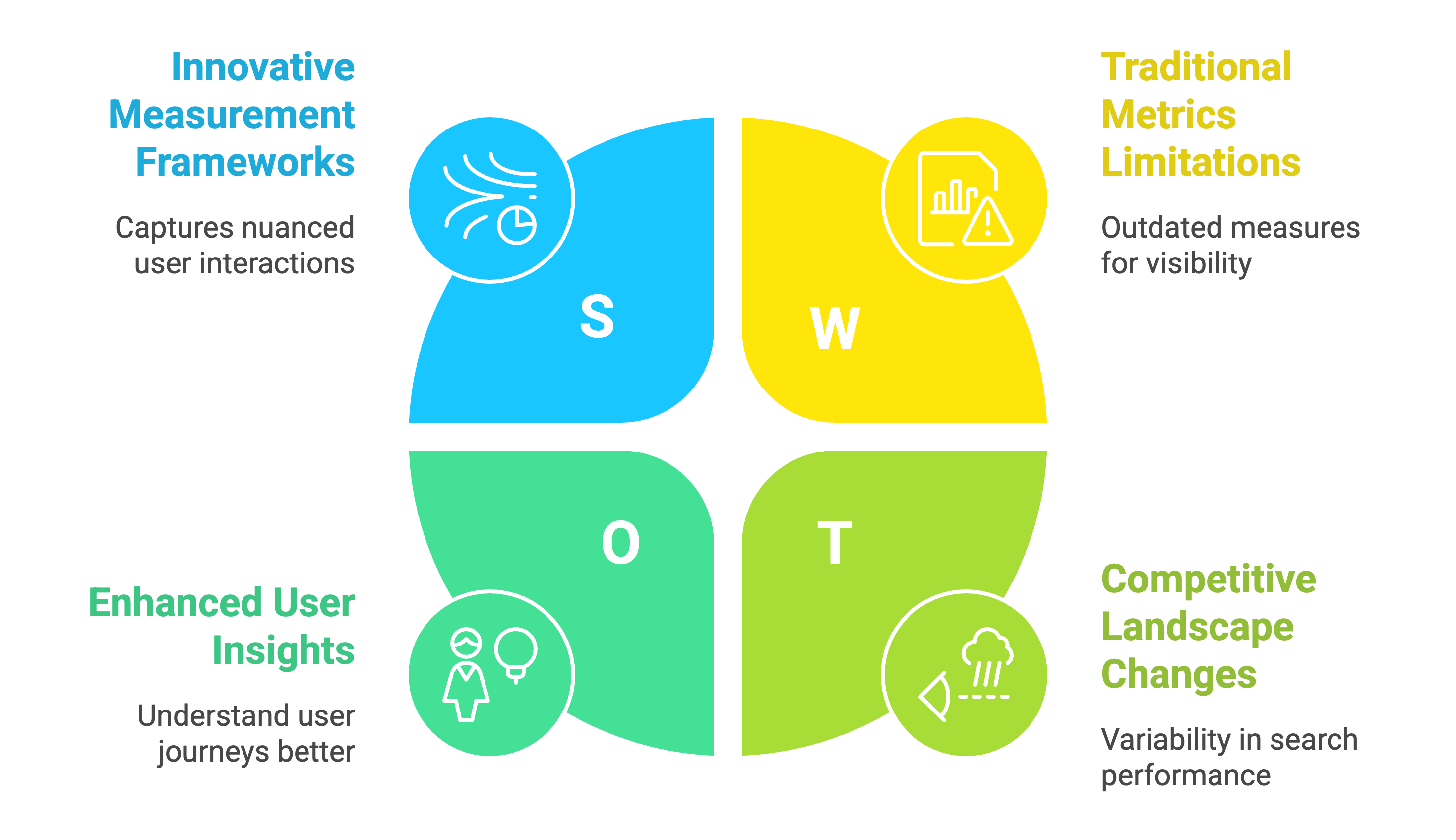
The rise of AI search engines necessitates a fundamental reevaluation of how SEO success is measured. Traditional metrics like keyword rankings and organic traffic, while still relevant, no longer tell the complete story of search visibility. New measurement frameworks have emerged to capture the nuanced ways users interact with AI search results.
Citation frequency has become a primary metric for AI search visibility. This measurement tracks how often your content is referenced as a source in AI-generated answers across different query types. Citation tracking tools capture mentions across major AI search platforms, providing insight into which content pieces gain recognition as authoritative sources. The quality of citations also matters—being featured as the primary source for a direct answer carries more weight than appearing as one of many supplementary references. Forward-thinking organizations now track citation share of voice, measuring their citation frequency relative to competitors for priority topics.
Zero-click influence measures the impact of content even when it doesn’t receive direct traffic. This emerging metric attempts to quantify brand exposure, authority building, and awareness generated through citations in AI search results. While more challenging to measure than direct traffic, proxy indicators like brand search volume increases, social mention growth following high-visibility AI citations, and survey data on where users encountered brand information can help quantify this impact. Recognition that value creation extends beyond direct website visits represents a significant evolution in search performance measurement.
Passage-level performance analysis examines which specific content sections receive recognition from AI search engines. This granular approach identifies the exact passages, data points, and insights that AI platforms find most valuable. Such detailed analysis helps content creators understand which elements of their content resonate with AI evaluation systems and informs more targeted optimization efforts. Tools that track passage-level citations across AI platforms provide valuable insights into content effectiveness beyond page-level metrics.
Conversational search mapping traces user journeys through AI search interactions. Unlike traditional search, where users typically enter a query and select from results, AI search often involves multi-turn conversations with follow-up questions and refinements. Understanding these conversational paths reveals how users navigate topics related to your business and identifies opportunities to address common follow-up questions in your content. This approach recognizes that visibility in AI search depends on addressing complete user journeys rather than isolated queries.
Intent fulfillment assessment measures how effectively content satisfies the underlying user needs behind queries. This approach goes beyond basic engagement metrics to evaluate whether content successfully addresses user questions, solves problems, or facilitates decisions. AI-powered content evaluation tools can analyze how comprehensively content addresses different dimensions of user intent and identify gaps where user needs remain unfulfilled. This metric aligns perfectly with how AI search engines evaluate content value—prioritizing sources that most completely address user needs.
Traffic quality metrics have gained importance as overall traffic volume from search may decrease while quality increases. These measurements examine user behavior after arriving from AI search platforms, tracking metrics like session duration, page depth, conversion actions, and return frequency. Content that receives fewer but higher-quality visitors who engage deeply and take valuable actions may actually deliver greater business value than content generating larger volumes of low-engagement traffic. This recognition has led many organizations to prioritize qualified traffic acquisition over raw visitor numbers.
Competitive visibility comparison tracks relative performance across traditional and AI search landscapes. This approach identifies whether your content performs consistently across search ecosystems or shows significant variation between traditional search rankings and AI search citations. Understanding these differences helps organizations allocate resources effectively between optimization strategies for different search environments. Tools that provide side-by-side visibility comparisons across Google, Perplexity, SearchGPT, and other platforms deliver crucial competitive intelligence for strategic decision-making.
The Future of SEO: Predictions Beyond 2025
While adapting to the current AI search landscape represents an immediate challenge, forward-thinking organizations must also anticipate further evolution in search technology and user behavior. Several emerging trends suggest how the relationship between content, search engines, and users may continue to transform in the years beyond 2025.
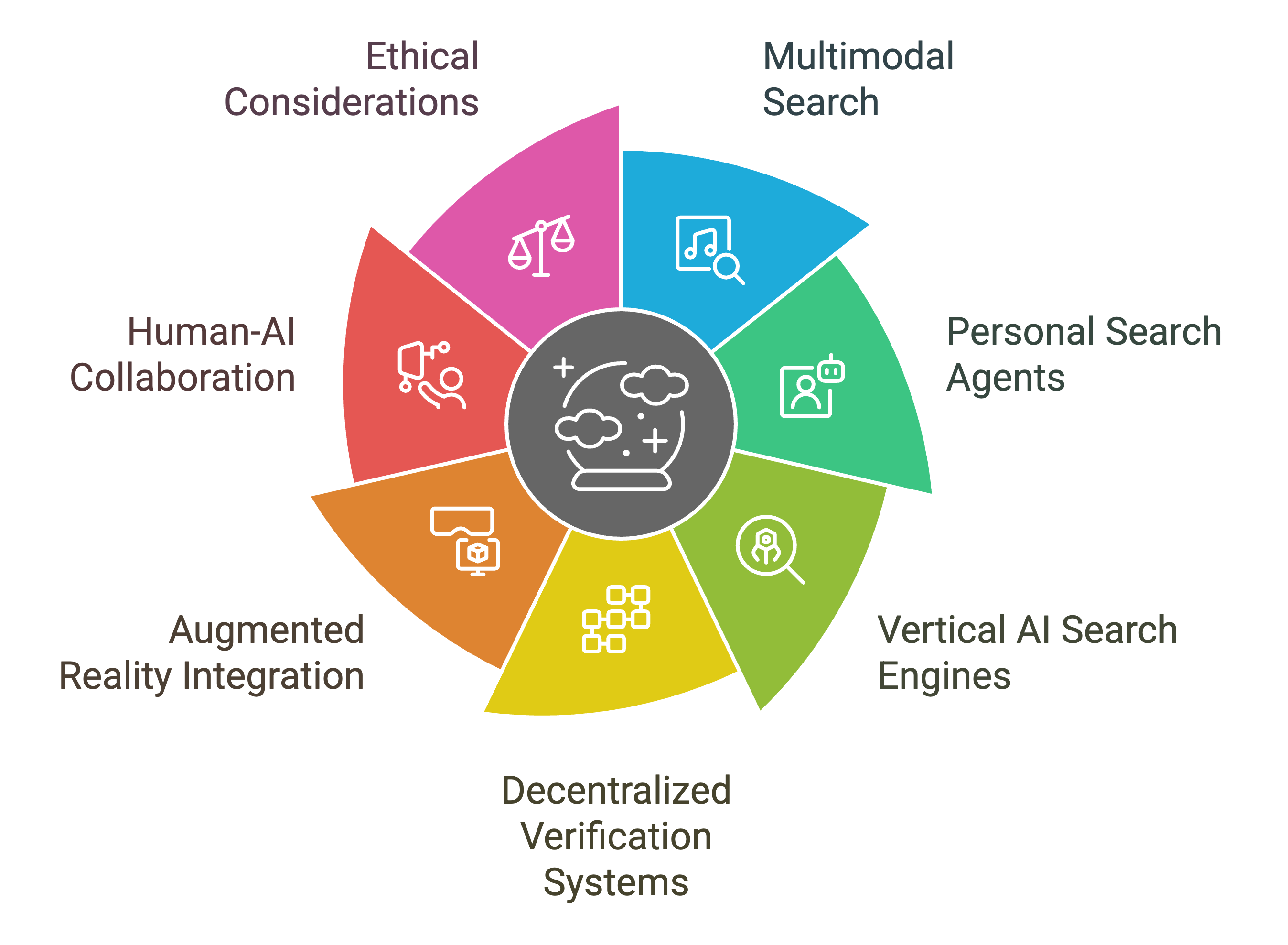
Multimodal search integration appears poised to redefine how users discover information. The boundary between text, voice, image, and video search is already blurring, with AI search engines increasingly capable of processing queries across multiple formats simultaneously. This convergence will likely accelerate, with users able to combine images, voice, text, and even gestural inputs to express complex search needs. Content creators must prepare for this multimodal future by developing comprehensive assets that work across formats. The strategic creation of text, image, video, and interactive content that reinforces consistent information while leveraging the strengths of each medium will become essential for complete search visibility.
Personal search agents represent another frontier in search evolution. These AI assistants, customized to individual preferences, needs, and contexts, will increasingly mediate between users and information sources. Rather than users directly querying search engines, these personalized agents will interpret needs, conduct research across multiple platforms, and synthesize results. This intermediary layer will create both challenges and opportunities for content creators, who must optimize not just for general AI search algorithms but for the specific evaluation criteria used by these personal agents. Building recognition as a preferred source for these AI intermediaries may become a critical aspect of search visibility.
Specialized vertical AI search engines focused on specific industries, topics, or content types are emerging as alternatives to general-purpose search platforms. These specialized engines can apply domain-specific knowledge and evaluation criteria that general search engines lack. For content creators, these vertical search platforms may offer opportunities to achieve visibility in specialized niches even as competition intensifies in general search. Developing optimization strategies tailored to the specific signals prioritized by vertical AI search engines in your industry could provide competitive advantages as search continues to fragment into specialized ecosystems.
Decentralized knowledge verification systems may emerge as counter-weights to the authority consolidation that AI search engines currently encourage. These systems, potentially built on blockchain or similar technologies, could provide alternative trust and verification mechanisms that don’t rely on centralized algorithmic judgments of authority. Such developments could create new pathways to establishing content credibility outside traditional authority metrics. Content creators should monitor these emerging verification systems and consider how they might complement traditional SEO approaches in establishing trust signals.
Augmented reality integration with search functionality appears increasingly likely as AR technologies mature. The ability to overlay digital information on physical environments creates new possibilities for information discovery and presentation. Search queries tied to physical locations, objects, or contexts could return results displayed directly in users’ visual fields rather than on screens. Preparing for AR search will require creating geospatially aware content, developing visual assets optimized for AR display, and considering how information can be meaningfully presented as overlays on physical reality.
Human-AI collaborative content creation may redefine how authority is established in search environments. As AI tools become integrated into content development workflows, the distinction between human-created and AI-assisted content continues to blur. Future search algorithms may prioritize content that demonstrates optimal collaboration between human expertise and AI capabilities—combining human creativity, ethical judgment, and specialized knowledge with AI’s ability to process vast information and identify patterns. Developing workflows that leverage this complementary relationship could become a key differentiator in establishing content authority.
Ethical search considerations will likely gain prominence as questions about bias, representation, and information quality in AI systems receive increasing attention. Search platforms may develop more sophisticated approaches to evaluating content fairness, diversity of perspective, and ethical standards. Content creators who proactively address these considerations in their material may gain advantages as ethical evaluation criteria become more integrated into search algorithms. Transparency about information sources, balanced presentation of perspectives, and careful attention to inclusive representation could become significant ranking factors in future search ecosystems.
Conclusion
The transformation of search through AI represents both a significant challenge and an unprecedented opportunity for businesses and content creators. As we navigate 2025, the continued evolution of Perplexity, SearchGPT, and Google AI Overview demands strategic adaptation across all aspects of search optimization. The shift toward semantic understanding, zero-click answers, and conversation-based search interactions has fundamentally altered how visibility is achieved and measured in digital environments.
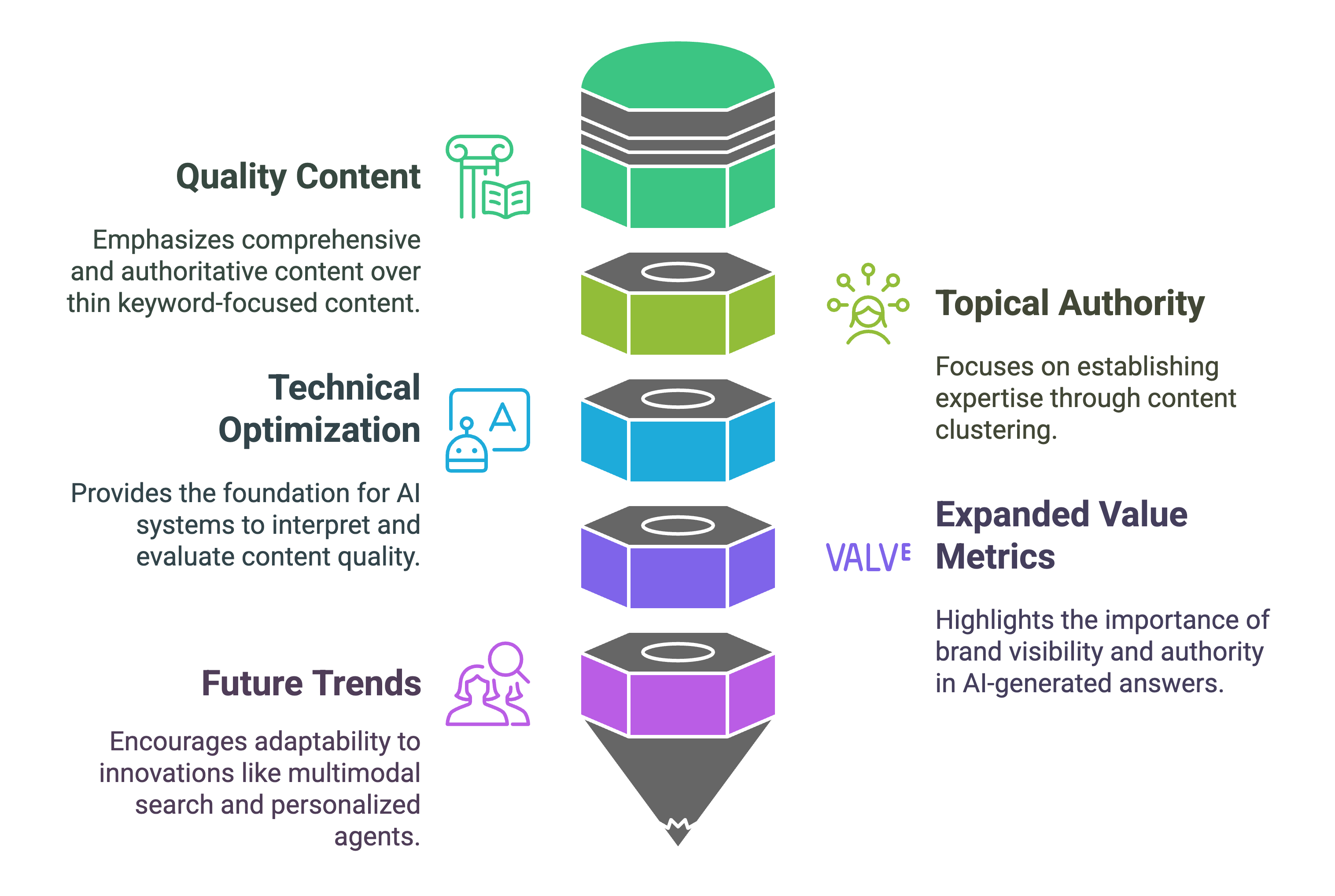
Success in this new landscape requires embracing several fundamental principles. First, quality has unquestionably triumphed over quantity, with comprehensive, authoritative content significantly outperforming thin content optimized for specific keywords. Second, topical authority established through content clustering has become essential for demonstrating the expertise that AI search engines prioritize when selecting sources. Third, technical optimization continues to provide the foundation that enables AI systems to accurately interpret and evaluate content quality.
Perhaps most importantly, the evolution of search necessitates a broader perspective on value creation. While direct website traffic remains valuable, citation in AI-generated answers creates brand visibility, establishes authority, and builds trust even without clicks. Organizations that recognize and measure this expanded impact will make more effective strategic decisions than those still focused exclusively on traditional traffic metrics.
As we look beyond 2025, further innovations in multimodal search, personalized search agents, and specialized vertical engines will continue to reshape the search landscape. Organizations that maintain adaptability, closely monitor emerging trends, and align their content with evolving user behaviors will find opportunities for visibility even as search technology continues its rapid evolution. By embracing the fundamental shift from keyword optimization to comprehensive authority building, businesses can position themselves for sustainable success in the age of AI search.
Frequently Asked Questions About AI’s Impact on SEO in 2025
How is AI fundamentally transforming user search behavior and result delivery?
Artificial intelligence has profoundly reshaped the search landscape by transforming user interactions from simple keyword queries to complex, contextual conversations. Today’s users engage with search engines across multiple formats including text, voice, image, and video, often switching between devices seamlessly. This evolution has been driven by chatbots and generative AI that have conditioned users to expect search engines to understand their intent beyond the specific words used in queries. The competitive environment has also evolved, with AI-native search platforms like Perplexity gaining market share and potentially challenging Google’s dominance. Users now expect direct, informative, and multimodal responses that address their needs without requiring additional navigation, creating a fundamentally different search experience than just a few years ago.
What key AI technologies are influencing SEO and how do they function?
Several groundbreaking AI technologies have transformed search engine functionality. Google pioneered this integration with RankBrain, which interprets ambiguous queries by analyzing user interactions with results. This was followed by BERT (Bidirectional Encoder Representations from Transformers), which significantly improved contextual understanding of words within sentences, prioritizing semantically rich content over keyword-optimized pages. MUM (Multitask Unified Model) further advanced these capabilities by processing complex queries and analyzing information across different formats and languages. The most significant evolution has come through Large Language Models (LLMs) like those powering SearchGPT, which offer multimodal chat capabilities and specialized “agents” that can perform diverse tasks from content creation to in-depth research with citations. These technologies collectively enable search engines to understand content at near-human levels of comprehension.
How can businesses adapt their SEO strategies for multimodal search and visual formats?
The dominance of text-only search has given way to multimodal search incorporating text, voice, images, and video. Businesses must enrich their content experiences by integrating professional photography, custom graphics, and video demonstrations that reinforce and expand upon textual information. Voice search optimization requires using natural language patterns and anticipating conversational questions that users might ask. Visual search platforms like Google Lens and Pinterest Lens create new opportunities for image optimization, particularly for product photographs and informational graphics. Video content has become essential as AI systems can now analyze video content for relevance to search queries. The most effective strategies integrate these elements cohesively, ensuring consistency across formats while leveraging the unique strengths of each medium to create comprehensive, multimodal content experiences.
Why does technical SEO remain crucial in the AI era and how should content be optimized for AI systems?
Despite AI’s transformation of search, technical SEO fundamentals remain essential and have even gained importance. Robust structured data implementation and schema markup serve as a translation layer between your content and AI systems, helping them interpret information about customer Q&A, product specifications, user reviews, and content creator expertise. These technical elements provide a roadmap for AI to understand and accurately represent your content. Site performance metrics like loading speed and mobile optimization continue to influence both user experience and search visibility. Content must be structured with clear semantic relationships between topics, subtopics, and entities. Technical optimization creates the foundation that allows AI systems to properly access, interpret, and evaluate content quality, making it an indispensable component of success in AI-driven search environments.
How does AI influence content creation and establishment of trust in AI-driven search environments?
AI has revolutionized content creation processes, assisting with topic research, idea generation, and even drafting preliminary content. However, establishing strong content credibility has become vital in AI-driven search. AI platforms evaluate authority through multiple dimensions beyond traditional backlinks, including information accuracy and source reliability. Content creators must focus on building and maintaining their reputation as providers of trustworthy, verified information. Using AI tools like ChatGPT can help analyze search intent and generate relevant keyword ideas that align with user needs. The most successful approach combines AI assistance for research and structure with human expertise, emotional intelligence, and ethical judgment to create content that demonstrates genuine authority. This balanced collaboration between human creativity and AI capabilities produces content that resonates with both users and AI evaluation systems.
How does AI enable greater search personalization and localization, and how can businesses leverage this?
AI algorithms enable search engines to personalize results based on a user’s past behavior, location, and device type. Two users performing identical searches may receive entirely different results tailored to their individual contexts. Businesses can leverage this personalization by incorporating location-specific keywords when local search relevance exists. Mobile and voice search optimization have become increasingly important as AI adapts results more significantly on these platforms. Content that addresses specific contextual needs rather than general information tends to perform better in personalized search environments. Understanding the various contexts in which users might seek your products or services—including time of day, location, device type, and previous interactions—allows for more targeted content development that aligns with the personalization capabilities of AI search systems.
What impact do Google’s Search Generative Experience and other AI conversational interfaces have on SEO and marketing strategies?
The introduction of Google’s Search Generative Experience (SGE) and similar conversational interfaces represents a paradigm shift in user-search interaction. Rather than simply indexing information, these systems generate content in response to queries, creating a more engaging and informative search experience. For marketers, this evolution shifts focus from traditional keyword optimization toward content that aligns with natural language processing and understanding. Content must directly answer questions and address user needs comprehensively to be selected as a source for AI-generated responses. The distinction between organic content and advertising may become increasingly blurred as personalized, AI-generated responses incorporate sponsored information. This changing landscape requires marketers to create content that demonstrates clear expertise, comprehensively addresses user needs, and establishes authority signals that AI systems recognize and prioritize.
How does the shift toward AI-driven search affect SEO importance for businesses, especially small businesses?
Despite the transformative changes brought by AI, SEO remains fundamental to online visibility and an essential component of successful digital marketing strategies. For small businesses in particular, SEO provides a crucial pathway to discovery by potential customers, driving organic traffic and building brand reputation. While specific tactics may evolve, the importance of optimizing content with relevant keywords, appropriate meta-tags, and quality backlinks to improve search result visibility remains constant. SEO continues to offer exceptional return on investment compared to many other marketing strategies by targeting users actively searching for relevant products or services, resulting in higher-quality traffic. The evolution toward AI-driven search doesn’t diminish SEO’s importance but rather transforms how it must be implemented, requiring greater focus on comprehensive authority building, semantic relevance, and user intent fulfillment. For businesses of all sizes, investing in evolved SEO approaches represents an investment in long-term growth and success.