The rapid emergence of artificial intelligence in the professional sphere is fundamentally reshaping the landscape of office work, particularly within small and medium-sized enterprises. This technological revolution presents both unprecedented opportunities and significant challenges for organizations and their employees. As AI systems become increasingly sophisticated and accessible, questions arise about the future role of human workers in environments where automation can handle increasingly complex tasks. This comprehensive analysis explores how AI is transforming office work in SMEs, examining current adoption trends, productivity implications, psychological impacts, skill transformations, and strategic considerations for businesses navigating this technological transition. The evidence suggests that while AI will dramatically alter the nature of office work, the future lies not in wholesale replacement of human workers but in evolving complementary relationships between human and artificial intelligence that leverage the unique strengths of each.
The AI Revolution in Office Work: A Paradigm Shift for Modern Businesses
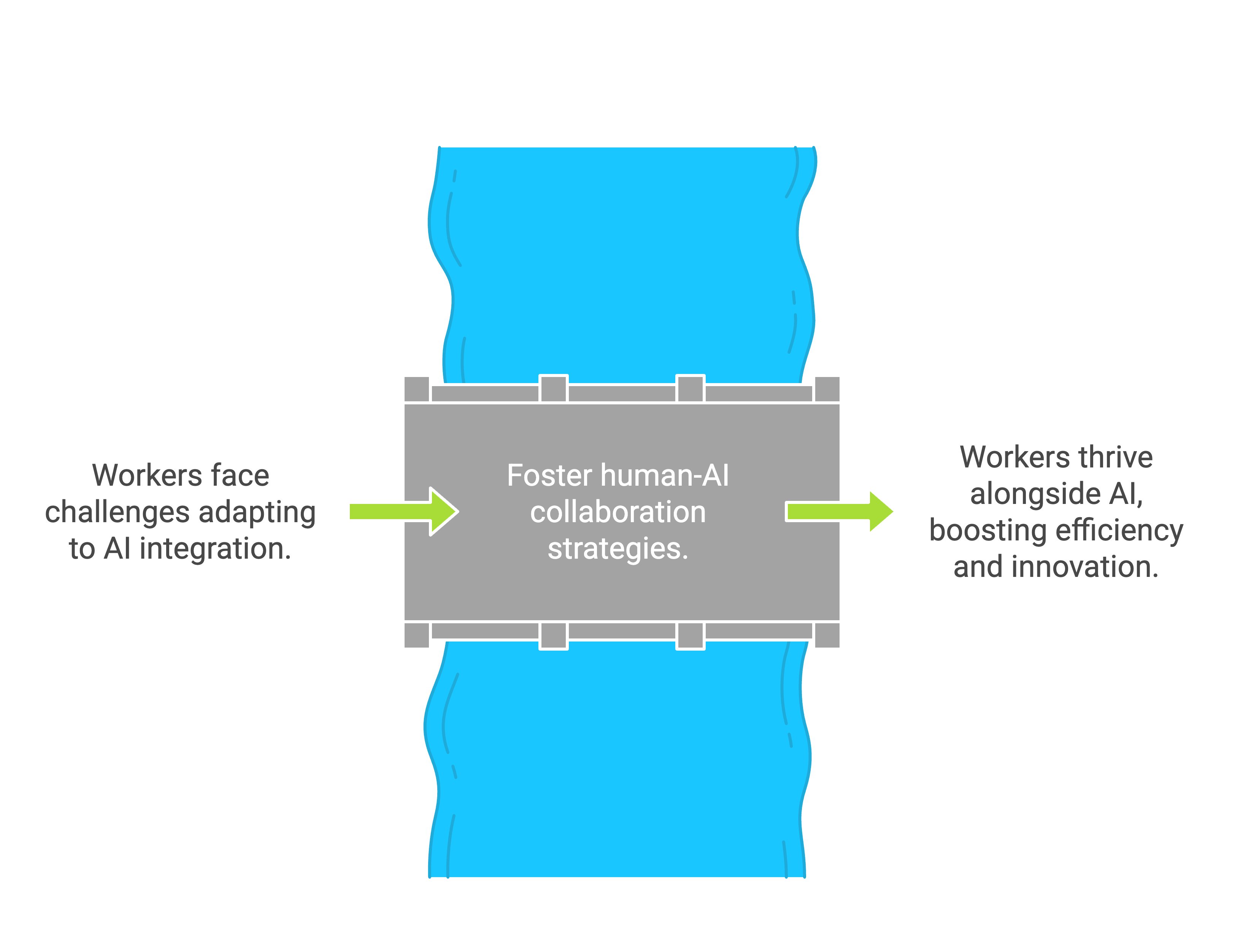
The integration of artificial intelligence into office environments represents one of the most significant workplace transformations since the advent of personal computing. Unlike previous technological revolutions that primarily automated physical tasks, AI systems can now perform cognitive functions once thought to be exclusively human domains. This capability fundamentally changes the relationship between workers and their tools, transforming technology from a passive instrument into an active collaborator in the workplace. The vision of a unified AI-driven office platform is rapidly materializing, with systems that can seamlessly manage routine office functions from communication and scheduling to data management and report generation.
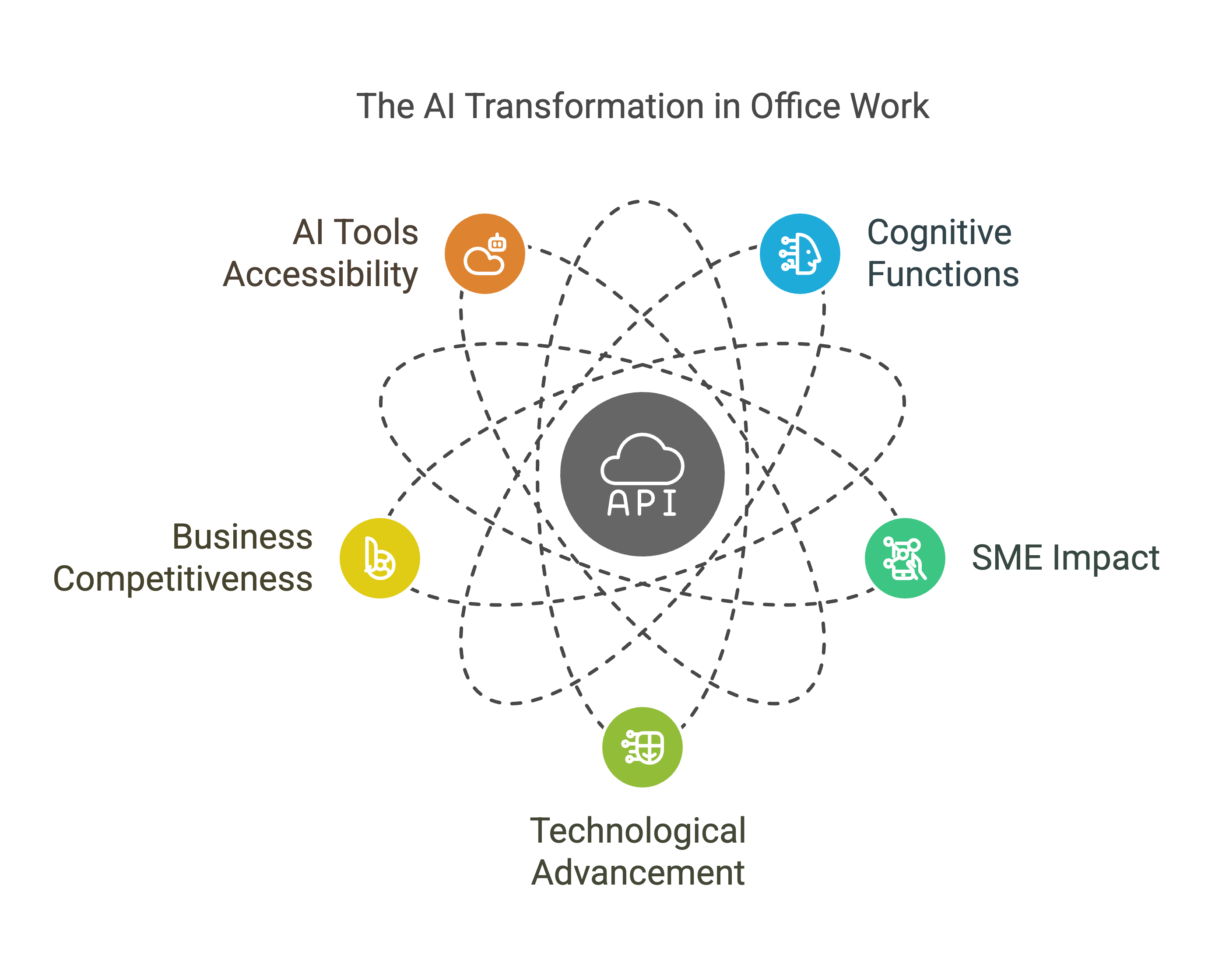
This transition is particularly significant for small and medium enterprises, which have historically lacked the resources to implement cutting-edge technologies at scale. The democratization of AI tools through cloud-based services and subscription models has leveled the playing field, allowing smaller organizations to access capabilities once reserved for large corporations with substantial IT budgets. In 2025, sophisticated AI tools are increasingly tailored specifically for SMEs, enabling them to compete more effectively with larger players in their industries. This accessibility represents a profound shift in how business capabilities are distributed across the economic landscape.
The pace of this transformation has accelerated dramatically since the introduction of generative AI systems like ChatGPT in late 2022. These technologies have demonstrated capabilities that surpassed many expert predictions, creating both excitement about productivity possibilities and anxiety about potential displacement. What distinguishes the current wave of AI advancement from previous technological evolutions is both its scope and velocity – rather than affecting a narrow range of tasks or industries, modern AI systems can potentially impact virtually every knowledge worker role across all sectors of the economy, and the rate of improvement shows little sign of plateauing in the near future.
Current Landscape: AI Adoption Trends in SMEs
Despite the transformative potential of AI technologies, their actual adoption in small and medium enterprises reveals a more nuanced picture. While enthusiasm for AI-powered solutions is high among technology observers and early adopters, implementation across the broader SME landscape remains relatively limited. Current data indicates that only about 15% of SME leaders are utilizing generative AI tools, with just 3% reporting regular usage and 12% occasional implementation. This represents a significant increase from the 5% adoption rate observed in early 2023, yet still indicates that the vast majority of small and medium businesses have yet to meaningfully incorporate AI into their operations.
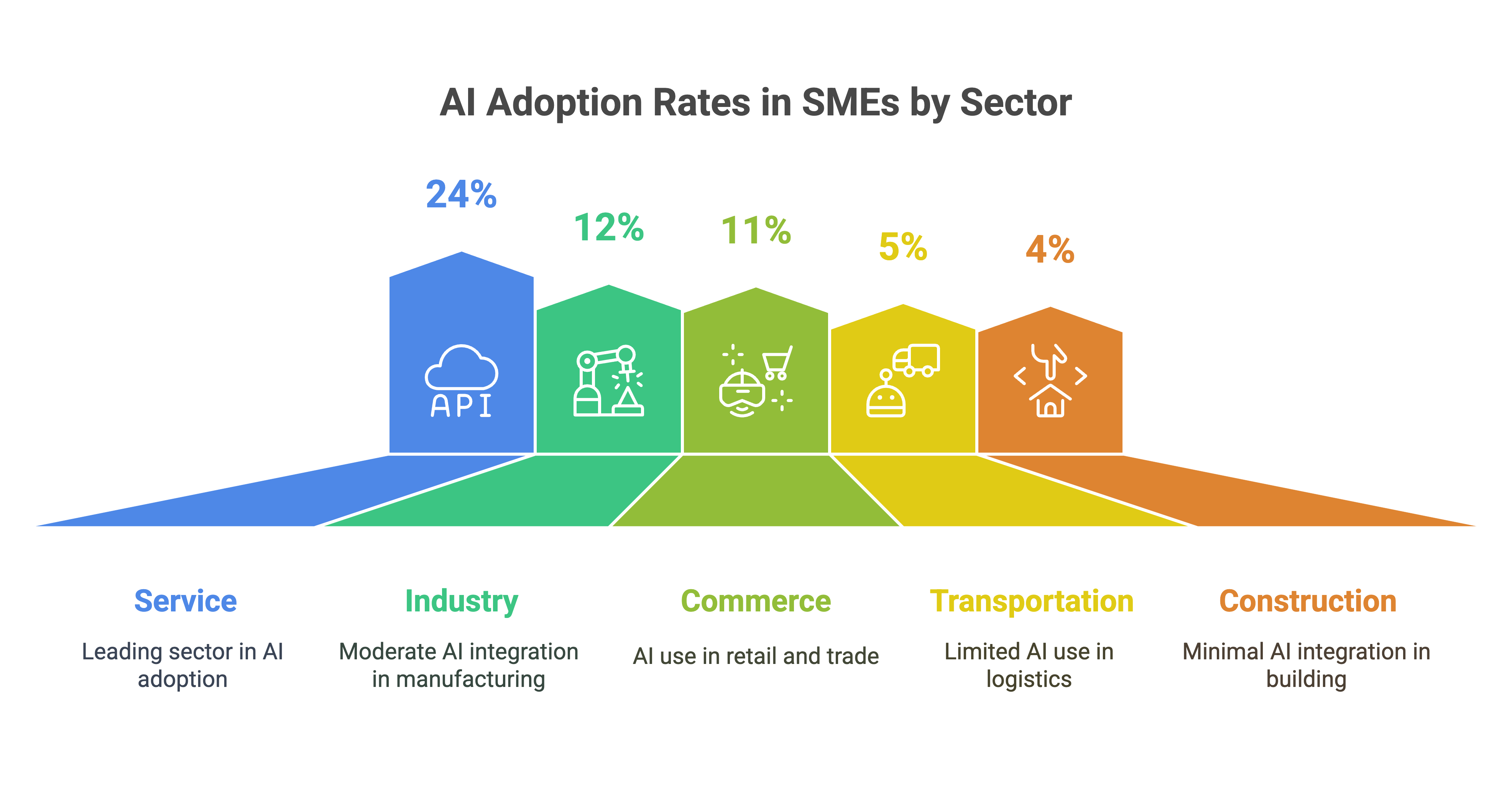
This adoption pattern varies considerably across sectors, with service-oriented businesses leading the way at 24% adoption, followed by industry (12%), commerce (11%), transportation (5%), and construction (4%). The variation reflects both differing suitability of current AI applications to specific business activities and varying levels of digital readiness across sectors. Companies with already high levels of digitalization generally find AI integration more straightforward than those still managing predominantly paper-based or manually-driven processes.
The primary obstacles to broader AI adoption in SMEs include difficulty identifying concrete applications relevant to specific business contexts, concerns about integration with existing systems, perceived implementation costs, and skills gaps within current teams. Among SME leaders who haven’t adopted AI technologies, a substantial 71% report simply not seeing relevant use cases for their businesses. This perception gap represents a significant barrier to realizing the potential benefits these technologies might offer smaller organizations.
Meanwhile, forward-thinking SMEs that have embraced AI are primarily using it for specific high-value applications: 56% leverage it for research, data collection and analysis; 54% for generating written content; 34% for translation services; and 28% for visual content creation. These use cases represent areas where AI can deliver immediate, tangible value with relatively low implementation complexity – focusing on augmenting rather than replacing existing business processes.
Productivity Gains: How AI Transforms Office Efficiency
The most compelling argument driving AI adoption in office environments centers on its potential to dramatically enhance productivity. Multiple independent studies corroborate significant efficiency improvements when AI tools are properly implemented in knowledge work settings. Research conducted by OpinionWay for Slack indicates that generative AI can deliver productivity gains of up to six hours per week for white-collar workers – effectively freeing more than half a day of working time for higher-value activities. Similarly, joint research from MIT and Stanford University observed average productivity increases of 14% among knowledge workers using AI assistants.
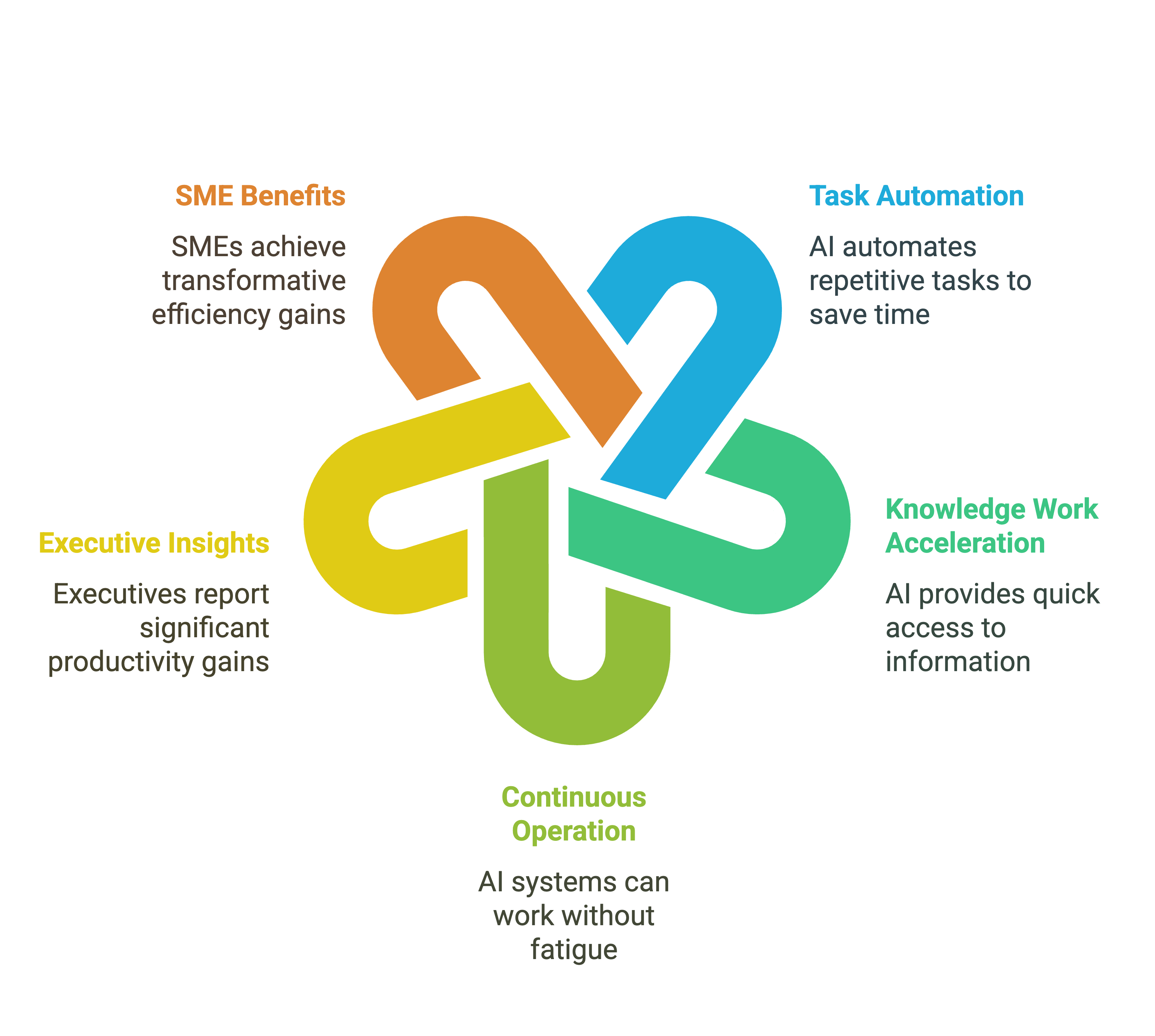
These productivity enhancements manifest through several mechanisms. First, AI excels at automating repetitive, time-consuming tasks that traditionally occupied significant portions of office workers’ schedules – activities like data entry, email management, appointment scheduling, and basic information retrieval. Second, AI tools accelerate knowledge work by providing instant access to information, generating initial drafts of documents, summarizing complex materials, and organizing disparate data into actionable insights. Finally, AI systems can work continuously without fatigue, potentially extending organizational productivity beyond traditional working hours.
Organizational leaders who have implemented AI solutions overwhelmingly report positive outcomes. According to Zoom’s recent study, 84% of executives observed improved productivity following AI integration, with 40% characterizing these improvements as significant. Similarly impressive, 96% of businesses utilizing AI reported positive or very positive impacts on their operations. These consistent findings across multiple studies suggest that productivity benefits are not merely theoretical but are being realized in practice across diverse organizational contexts.
For SMEs specifically, these efficiency gains can be transformative, allowing smaller teams to accomplish more without proportional increases in headcount or expenses. AI-driven automation enables smaller organizations to maintain lean operational structures while scaling their output, potentially altering competitive dynamics in markets previously dominated by larger players with greater human resources. Case studies demonstrate that when properly implemented, AI tools allow SME employees to focus their limited time on strategic priorities and high-value client interactions rather than administrative overhead.
The Great Skills Shift: What Office Workers Need to Master in the AI Era
The integration of AI into office environments is catalyzing a profound transformation in the skills demanded from workers. This evolution represents not merely an incremental change but a fundamental reconceptualization of valuable workplace capabilities. As AI systems increasingly handle routine analytical and administrative tasks, the premium on uniquely human capabilities is rising dramatically. Today, professionals are adding a 40% broader skillset to their profiles than they did in 2018, reflecting the rapid diversification of workplace demands in the AI era.
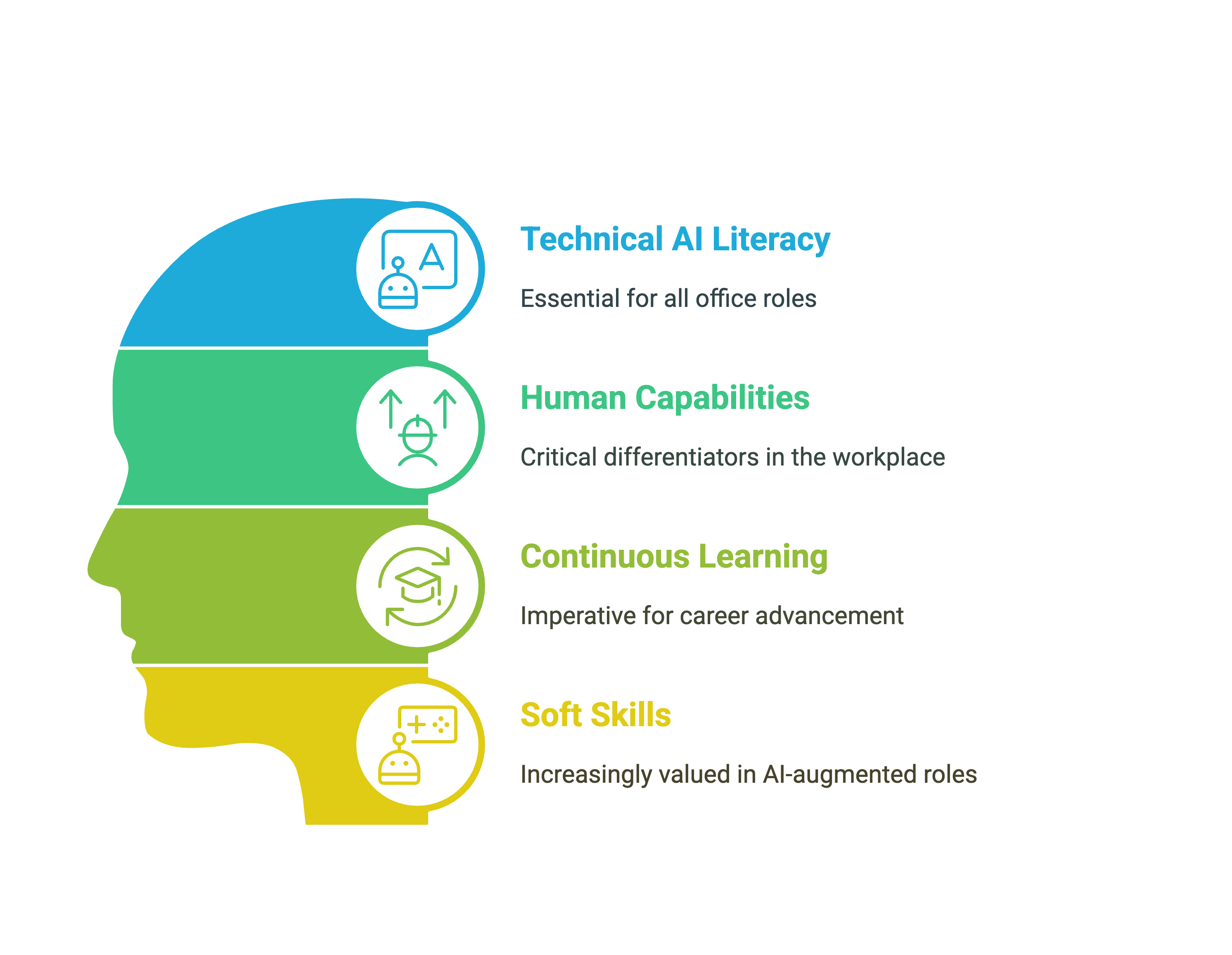
Technical AI literacy has quickly become an essential foundation for virtually all office roles. Professionals are now more than twice as likely to add AI skills to their profiles compared to 2018, with dramatic increases observed even in fields not traditionally associated with technology, such as recruiting, marketing, healthcare, and sales. These professionals are now seven times more likely to develop AI capabilities than just six years ago. The market is responding accordingly – more than half of hiring managers report they would not hire candidates lacking AI literacy, despite only one in 500 job listings explicitly requiring these skills.
However, the skills evolution extends far beyond technical AI competencies. As automation handles an increasing share of structured, predictable work, the value of distinctly human capabilities has appreciated significantly. Skills like emotional intelligence, creative problem-solving, ethical judgment, and interpersonal communication are becoming critical differentiators in the workplace. In positions that historically placed less emphasis on these “soft skills,” their importance has grown by approximately 20% since 201814. This shift reflects growing recognition that AI’s comparative advantage lies in data processing and pattern recognition, while humans excel at contextual understanding, moral reasoning, and novel thinking.
For office workers navigating this transition, the imperative for continuous learning has never been stronger. Survey data indicates that 76% of employees desire formal training in effective AI utilization, recognizing that proficiency with these tools will increasingly determine career advancement opportunities. Meanwhile, research from McKinsey suggests approximately 20% of employees will require comprehensive requalification to meet the demands of an AI-augmented workplace. This retraining challenge represents a significant undertaking for organizations and individuals alike, particularly for mid-career professionals whose formal education predated the AI revolution.
Human-AI Collaboration Models: The Future Workplace Paradigm
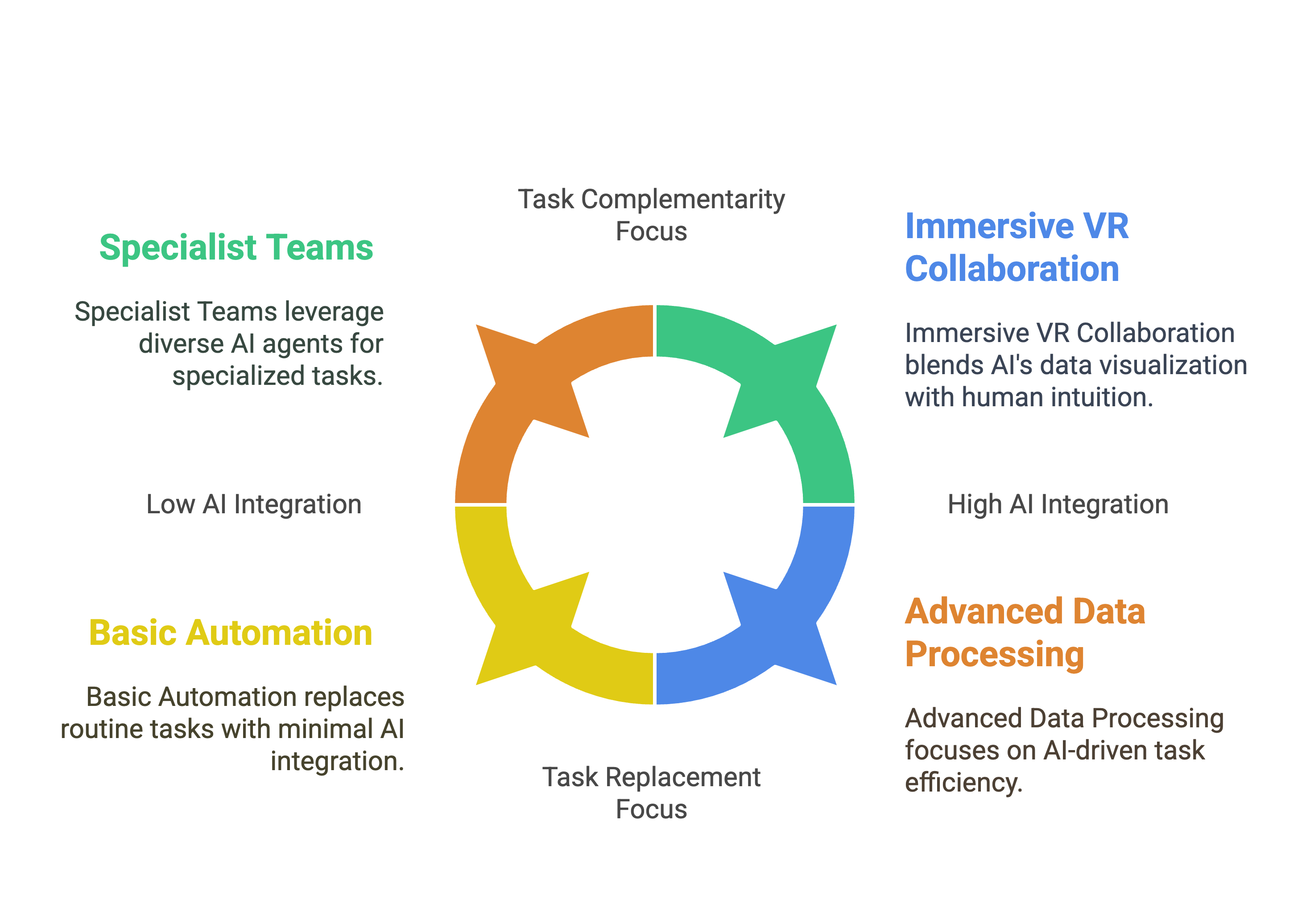
The future workplace will be defined not by AI replacement of human workers but by sophisticated collaboration models that leverage the complementary strengths of human and artificial intelligence. Different approaches to this collaboration are already emerging, with organizations experimenting to find optimal arrangements for their specific contexts. One vision involves a team-of-specialists model, where humans work alongside multiple AI agents, each with specialized capabilities designed for particular tasks or domains. This approach mirrors how professionals currently collaborate with human specialists, creating a familiar organizational structure enhanced by AI capabilities.
In more advanced implementations, these collaborations could evolve into immersive experiences leveraging spatial computing technologies. Deloitte Insights describes a potential future where “a human donning a pair of VR glasses and seeing a table full of coworkers ready to meet. Each is a gen AI program with a face, voice, and distinct personality. Each ‘agent’ can provide status updates, ask questions, strategize, and—unlike humans—instantly present complex data visualizations and adjust them in real time”. Such arrangements would blend the computational power of AI with intuitive human-like interactions, potentially overcoming current friction points in human-computer interfaces.
For SMEs, effective human-AI collaboration models will likely emphasize complementarity rather than replacement. This means deploying AI for tasks where it excels—data processing, pattern recognition, routine communications, and procedural workflows—while positioning human workers to focus on relationship management, creative problem-solving, strategic decision-making, and ethical oversight. Evidence suggests this division of labor maximizes overall productivity while maintaining the human connections essential to many small business value propositions.
The psychological dimension of these collaboration models cannot be overlooked. How AI systems are framed and introduced significantly impacts employee acceptance and effective utilization. When positioned as tools that enhance human capabilities rather than replace human workers, AI solutions typically encounter less resistance and achieve higher adoption rates. Similarly, involving employees in implementation decisions and providing clear guidelines about appropriate AI use cases helps establish healthy collaboration patterns from the outset.
Psychological Impact: Addressing Employee Concerns and Anxiety
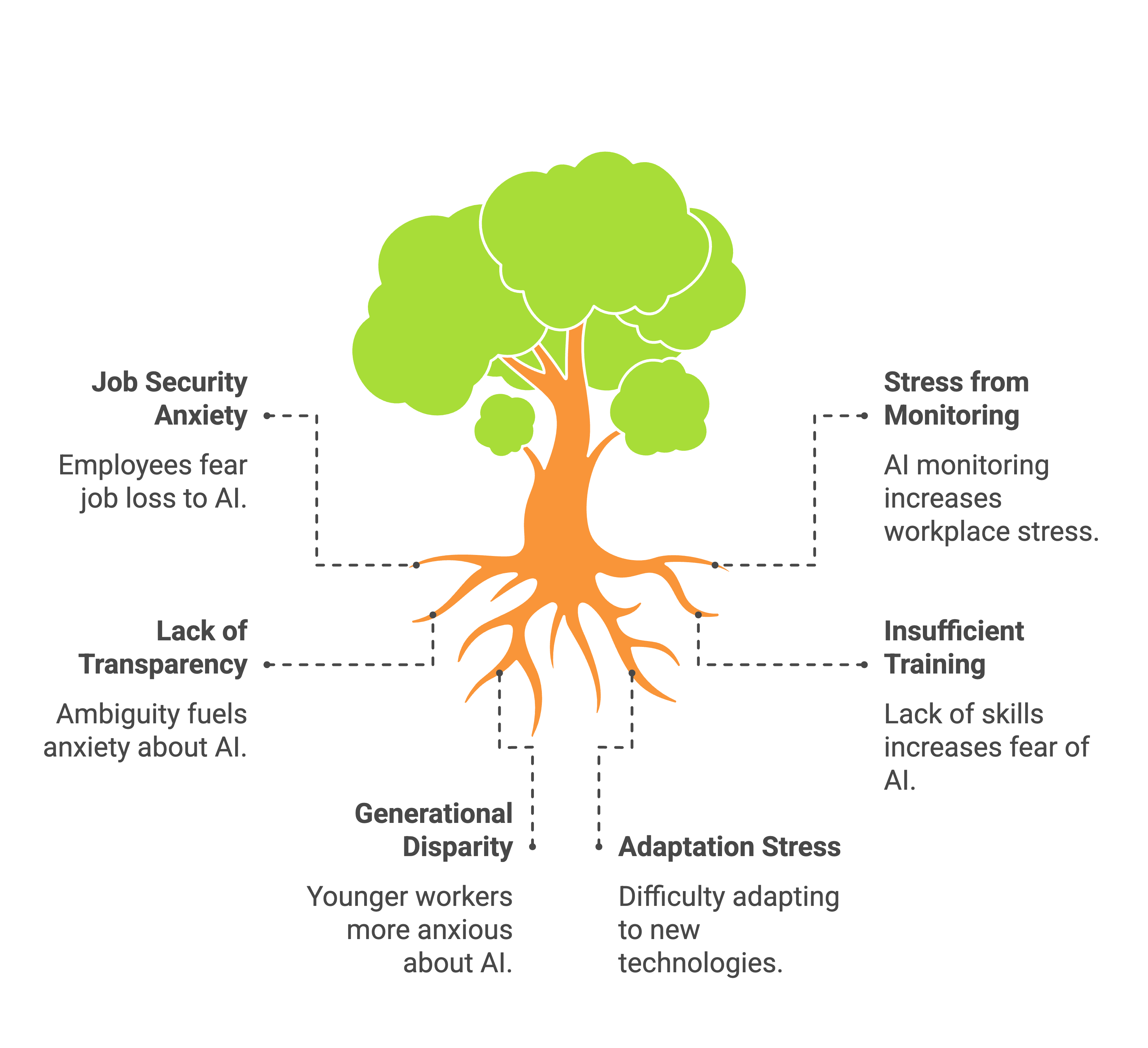
The introduction of AI technologies into office environments generates significant psychological effects that organizations must proactively address. Research from the American Psychological Association reveals that 38% of employees worry about AI potentially making their jobs obsolete. This “AI anxiety” correlates strongly with negative mental health outcomes – 51% of employees concerned about AI report that work negatively impacts their mental health, compared to just 29% of those without such concerns. Similarly, 64% of AI-anxious employees report feeling stressed during the workday, versus 38% of those without AI worries.
These psychological reactions vary considerably across demographic segments. Younger workers demonstrate heightened concern about AI’s impact on employment stability, with 53% of those under 25 expressing fear that AI might threaten their positions, compared to 42% among workers over 55. This generational disparity may seem counterintuitive given younger workers’ typically greater technological fluency, but likely reflects their longer future career horizons and potentially greater awareness of AI’s rapidly expanding capabilities.
The psychological impact extends beyond anxiety about job security to include stress related to adapting to new technologies and potentially increased workplace monitoring. AI-powered workplace monitoring technologies have been linked to adverse mental health outcomes – 32% of monitored employees report poor mental health compared to 24% of non-monitored employees. Moreover, 56% of monitored workers experience regular workplace stress versus 40% of their non-monitored counterparts. These findings suggest that certain AI implementations may inadvertently create psychological burdens that offset their productivity benefits.
Addressing these psychological challenges requires deliberate organizational strategies. Transparency about AI implementation plans is crucial – ambiguity tends to amplify anxiety by allowing worst-case scenarios to flourish in the absence of clear information. Additionally, providing employees with meaningful input into how AI tools are deployed and used helps establish a sense of agency rather than vulnerability. Finally, offering comprehensive training not only builds technical competence but also reduces anxiety by demystifying the technology and clarifying its limitations alongside its capabilities.
SME-Specific Challenges and Opportunities in AI Integration
Small and medium enterprises face distinct challenges and opportunities when integrating AI into their operations. Unlike large corporations with dedicated innovation departments and substantial technology budgets, SMEs typically operate with constrained resources and limited specialized technical expertise. This reality shapes both the obstacles they encounter and the strategies likely to prove successful in their AI adoption journeys.
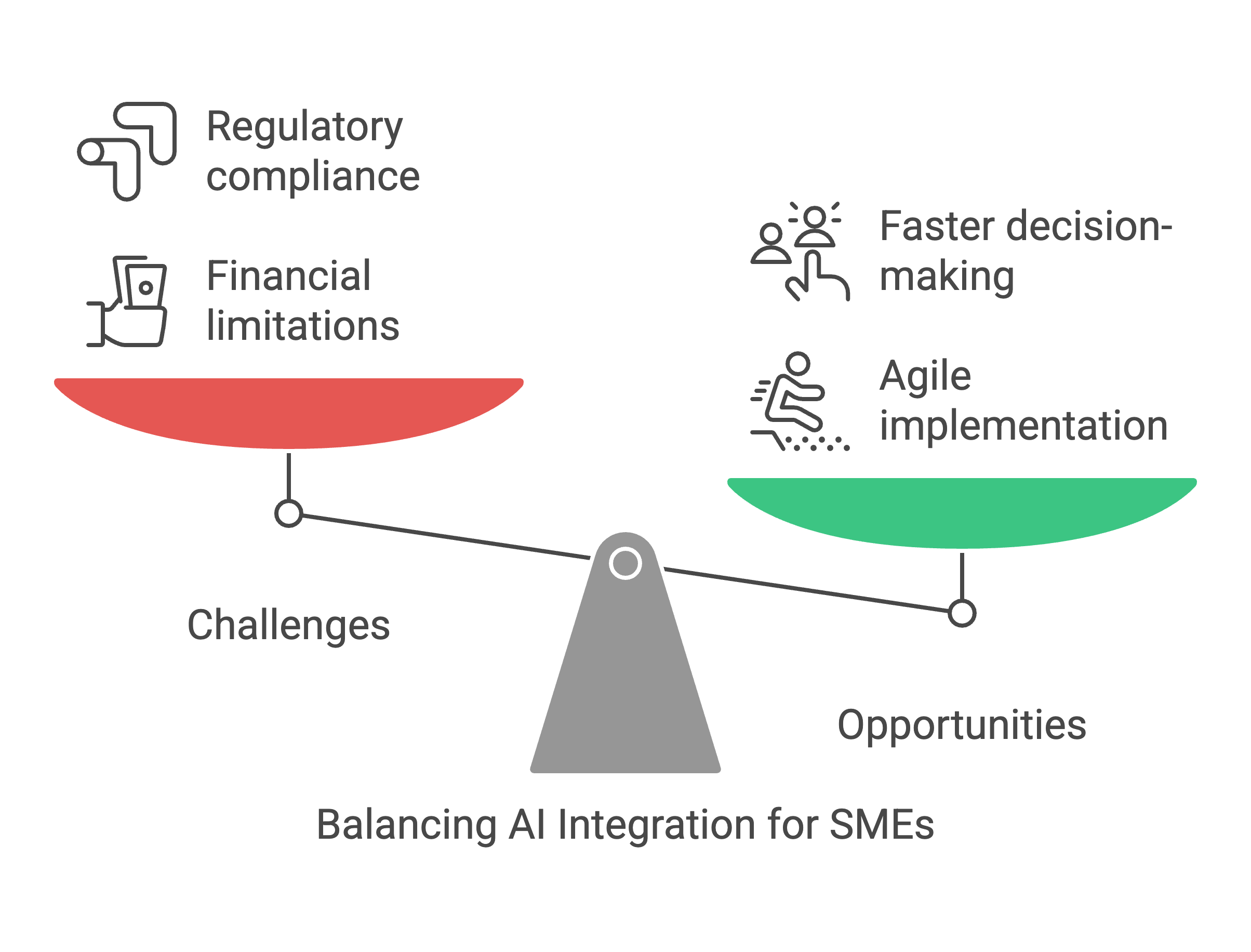
The resource constraints manifest in several dimensions. Financial limitations may restrict access to premium AI solutions or customized implementations tailored to specific business needs. Human resource constraints mean existing staff must often take on AI implementation responsibilities alongside their regular duties, potentially creating workload pressures and knowledge gaps. Technical infrastructure limitations may complicate integration with legacy systems or data sources. Together, these constraints can make AI adoption appear particularly daunting for smaller organizations.
Regulatory compliance presents another significant challenge for resource-limited SMEs. The EU AI Act, for example, establishes comprehensive requirements for AI systems based on their risk levels. While the legislation includes provisions specifically designed to support smaller businesses – including free access to regulatory sandboxes, simplified documentation requirements, and proportionate compliance costs – navigating these regulations still requires legal and technical knowledge that may exceed in-house capabilities5. Similarly, data privacy regulations like GDPR introduce compliance considerations that smaller organizations may struggle to fully address.
Despite these challenges, SMEs also possess unique advantages in the AI adoption landscape. Their typically flatter organizational structures and shorter decision chains can facilitate faster implementation once commitments are made. Smaller data environments may prove easier to prepare for AI applications than the complex legacy data architectures of larger enterprises. Perhaps most importantly, the agility and adaptability that characterize successful small businesses align well with the iterative approach required for effective AI implementation.
For SMEs to successfully navigate AI adoption, strategic focus is essential. Rather than attempting broad transformations, successful small business implementations typically begin with clearly defined use cases that address specific pain points or opportunities. Starting with applications that offer quick wins – such as automating repetitive administrative tasks or enhancing customer response systems – builds confidence and organizational learning that can support more ambitious implementations over time.
Ethical Considerations for AI Implementation in Office Settings
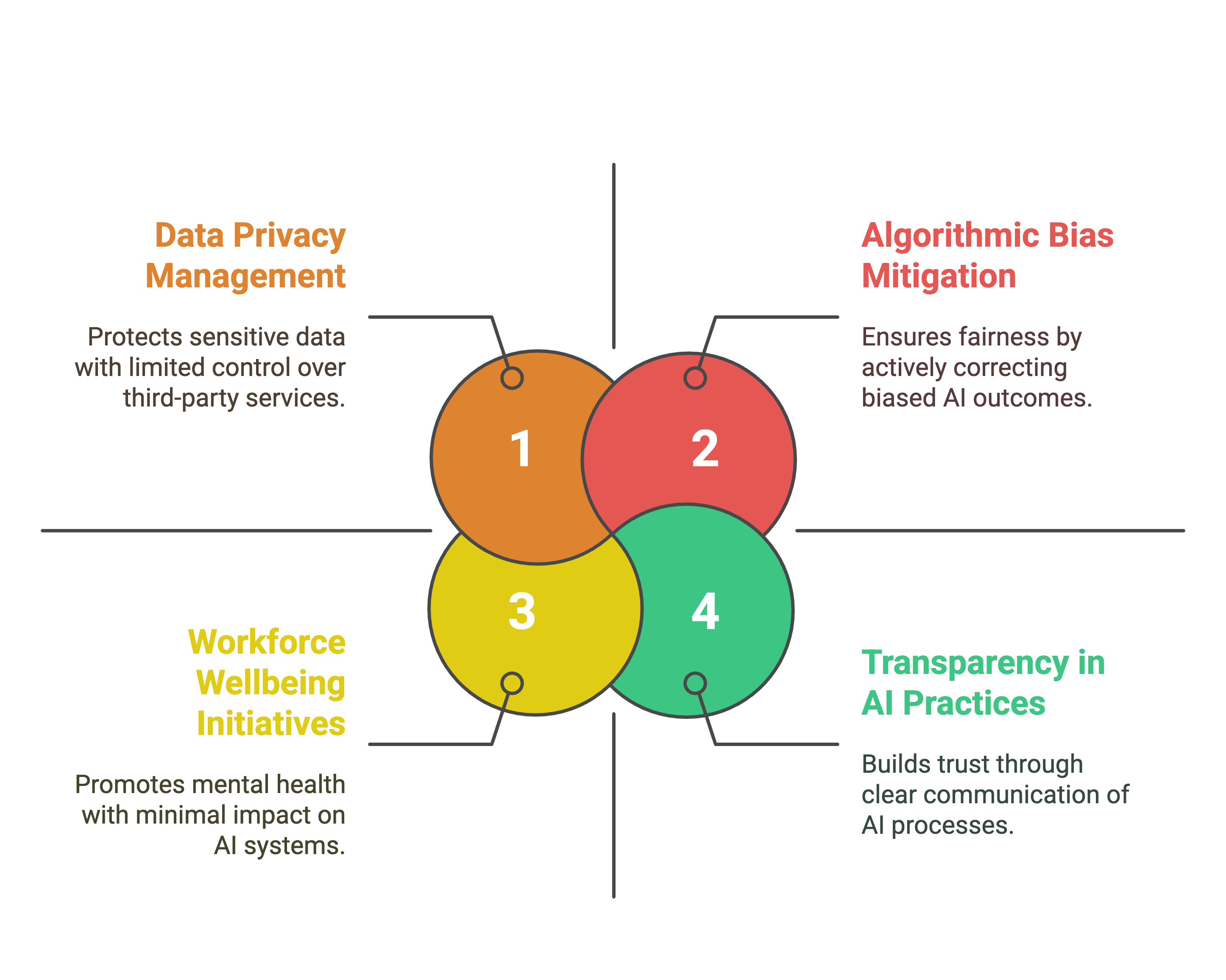
Ethical considerations must form a central component of AI implementation strategies, particularly for office environments where these systems may significantly impact human careers and working conditions. Organizations face multifaceted ethical challenges that extend beyond legal compliance to encompass fundamental questions about fairness, transparency, privacy, and human dignity in AI-augmented workplaces.
Data privacy represents a primary ethical concern, particularly given the substantial volumes of potentially sensitive information that office-focused AI systems may access and process. SMEs implementing AI solutions must carefully consider what data these systems utilize, how it is secured, whether employee and customer privacy expectations are respected, and how transparent the organization is about its data practices. These considerations become especially complex when organizations rely on third-party AI services that may have their own data collection and utilization practices.
Algorithmic bias presents another critical ethical challenge. AI systems trained on historical data may inadvertently perpetuate or amplify existing biases in workplace practices, potentially creating discriminatory outcomes in areas like hiring, promotion, performance evaluation, or work assignment. Small businesses may lack the specialized expertise to identify and mitigate these biases, making them particularly vulnerable to implementing systems with embedded unfairness. Addressing this challenge requires careful attention to training data quality, regular testing for differential impacts across demographic groups, and maintaining human oversight of consequential decisions.
The impact on workforce wellbeing constitutes a third major ethical dimension. Implementing AI in ways that intensify work pace, increase surveillance, reduce autonomy, or create unrealistic performance expectations can negatively affect employee mental health and job satisfaction. Research indicates that workplace monitoring technologies – often AI-enabled – correlate with increased stress, burnout, and intentions to leave. Organizations have ethical responsibilities to ensure their AI implementations enhance rather than diminish the quality of work life.
Navigating these ethical considerations requires deliberate governance structures and processes. For SMEs, this might include developing clear ethical guidelines for AI use, establishing review processes for new implementations, providing channels for employee feedback about AI systems, and regularly evaluating both the intended and unintended consequences of deployed technologies. While smaller organizations may lack formal ethics committees, they can still incorporate ethical reflection into their decision-making processes and potentially engage external expertise for particularly sensitive applications.
Job Transformation vs. Job Displacement: The Real Impact of AI
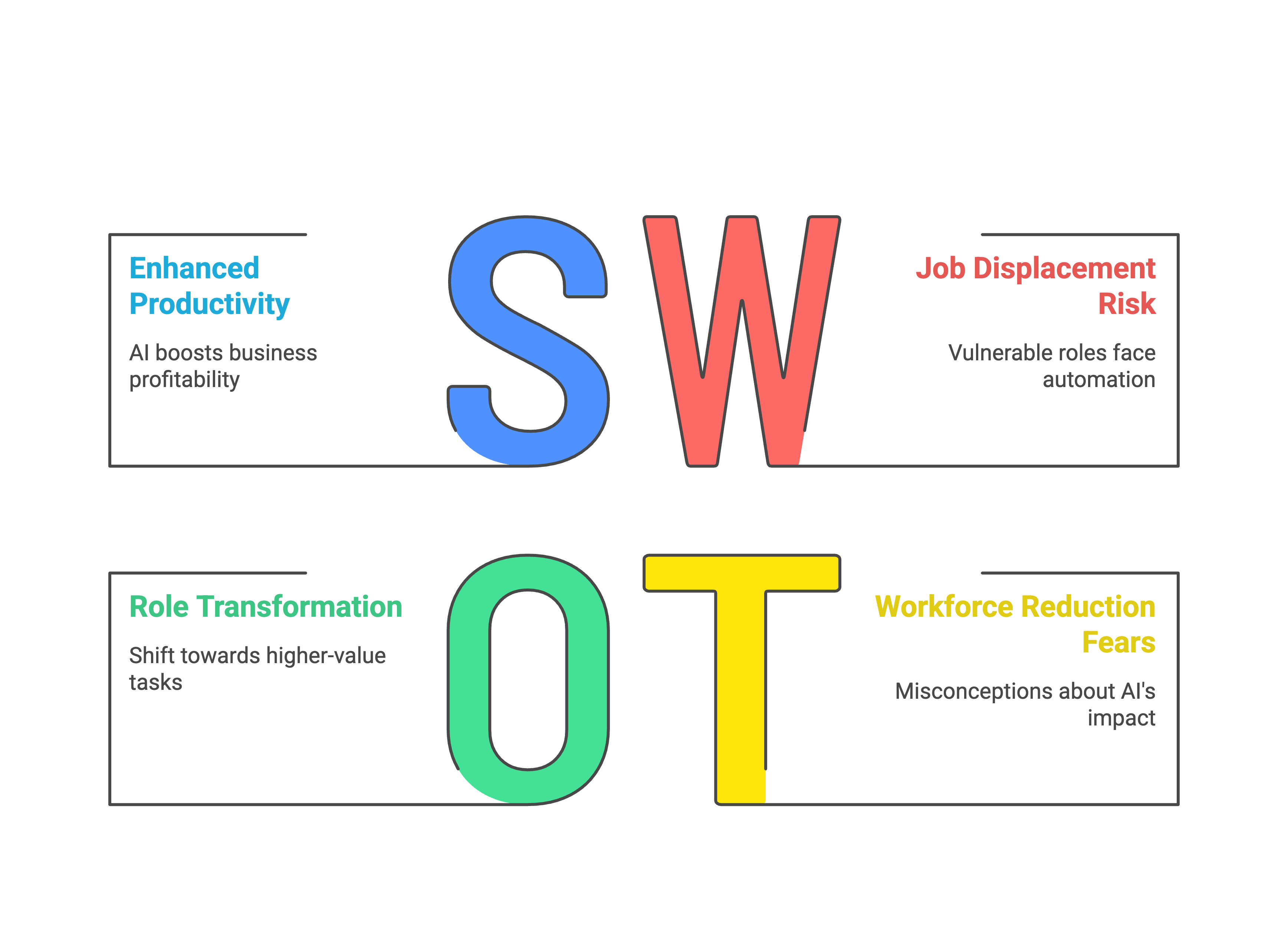
Perhaps the most pressing question concerning AI in office environments is its ultimate impact on employment – will these technologies primarily complement human workers or replace them? The evidence suggests a more nuanced outcome than either extreme position, with AI driving significant job transformation while causing more selective displacement concentrated in specific roles and functions.
Historical patterns of technological advancement offer some perspective. Previous waves of workplace automation have typically eliminated certain job categories while creating others, often generating net employment growth over time despite transitional disruptions. However, AI’s ability to perform cognitive tasks represents a qualitatively different challenge that may affect previously insulated knowledge worker roles. According to International Monetary Fund estimates, approximately 40% of global jobs could be “affected” by AI – but importantly, being affected does not necessarily mean elimination.
The transformation effects are already visible across numerous office functions. Administrative roles are evolving from primarily executing routine tasks to managing exceptions and relationships. Marketing positions are shifting from content production toward strategic direction and creative oversight. Customer service roles are transitioning from handling standard inquiries to addressing complex problems requiring emotional intelligence and judgment. In each case, AI handles increasingly sophisticated routine elements while human workers focus on higher-value activities requiring uniquely human capabilities.
This transformation perspective aligns with current empirical observations. Among businesses that have implemented AI, the predominant pattern is not workforce reduction but productivity enhancement. An Accenture study cited by France Travail suggests AI could improve business profitability by nearly 38% by 2035, primarily through augmenting human capabilities rather than replacing human workers. Similarly, McKinsey’s “The State of AI in 2023” found that only 8% of organizations expect AI to reduce their workforce by more than 20%.
For individual office workers, the critical factor determining vulnerability to displacement appears to be the composition of their role – specifically, the proportion of time spent on routine, predictable tasks versus activities requiring creativity, emotional intelligence, ethical judgment, or complex problem-solving. Roles heavily weighted toward the former category face greater displacement risk, while those dominated by the latter appear more complementary to AI capabilities. This distinction suggests career strategies focused on developing capabilities that are difficult to automate will prove most resilient in an AI-augmented workplace.
Preparing Your Workforce for the AI Transition: Training and Development Strategies
Successfully navigating the AI transformation requires comprehensive workforce development strategies that prepare employees for evolving workplace demands. Organizations that proactively invest in human capability development alongside technological implementation achieve significantly better outcomes than those that treat these as separate initiatives. Effective training approaches address both technical competencies and adaptive capabilities, ensuring employees can successfully collaborate with increasingly sophisticated AI systems.
A structured skills development framework offers the most effective approach for addressing diverse learning needs. Genpact’s model illustrates how this might function in practice, with a multi-phase process that includes: initial assessment to identify both organizational needs and individual capabilities; self-directed learning for foundational knowledge; engagement with subject matter experts through virtual collaboration; and practical application with light supervision from experienced practitioners. This approach combines scalability with personalization, enabling organizations to develop capabilities across their workforce while addressing individual learning paths.
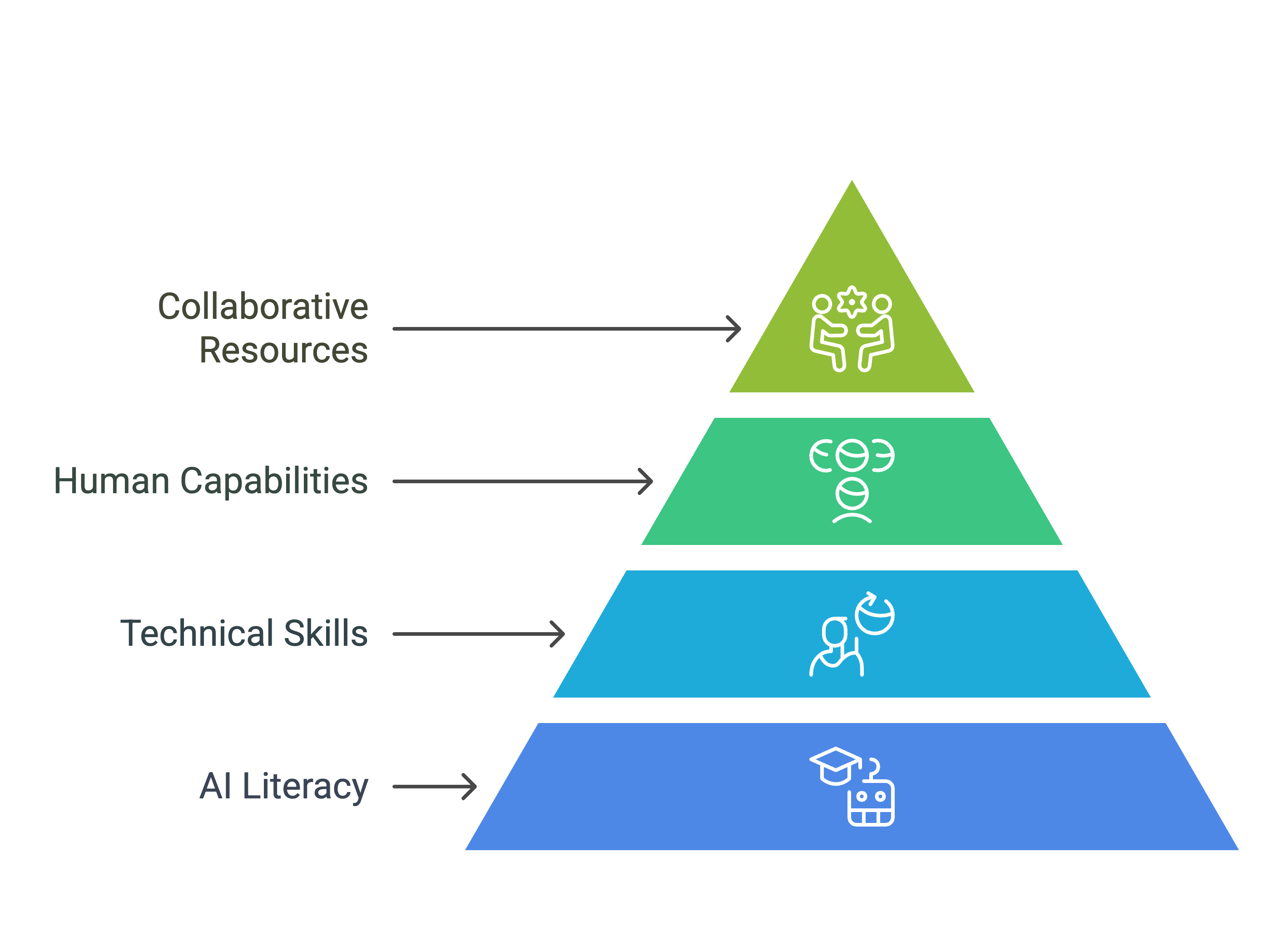
Technical AI literacy represents an essential foundation for virtually all office roles. This includes understanding AI fundamentals, capabilities, and limitations; proficiency with relevant AI tools and platforms; familiarity with prompt engineering techniques for generative systems; and awareness of data considerations that affect AI performance. These competencies enable employees to effectively leverage AI tools within their specific functional domains, maximizing productivity benefits while maintaining appropriate human oversight.
However, technical skills alone prove insufficient. The most successful workforce development initiatives equally emphasize distinctly human capabilities that complement rather than compete with AI strengths. These include creative problem-solving in ambiguous situations; ethical reasoning about complex tradeoffs; emotional intelligence in interpersonal interactions; adaptive learning for continuous skill development; and systems thinking to understand broader implications and interconnections. LinkedIn’s Future of Work report highlights how the value of these human capabilities varies across professions – for instance, AI can augment up to 96% of software engineering competencies but only about 4% of nursing skills.
For SMEs with limited training resources, collaborative approaches may prove particularly valuable. Industry associations, educational institutions, government programs, and AI vendors themselves increasingly offer learning resources targeted at smaller organizations. Leveraging these external resources while creating internal knowledge-sharing mechanisms can help SMEs develop critical capabilities without establishing comprehensive training infrastructures. Additionally, adopting a “learn-by-doing” approach that combines training with actual implementation projects allows employees to develop practical skills directly relevant to their work contexts.
The Regulatory Landscape: AI Governance and Compliance for Office Work
The regulatory environment surrounding AI implementation is rapidly evolving, with significant implications for office work contexts. Organizations must navigate an increasingly complex landscape of laws, regulations, and standards addressing various aspects of AI deployment. Understanding this regulatory context is essential for implementing compliant systems while avoiding potential legal and reputational risks.
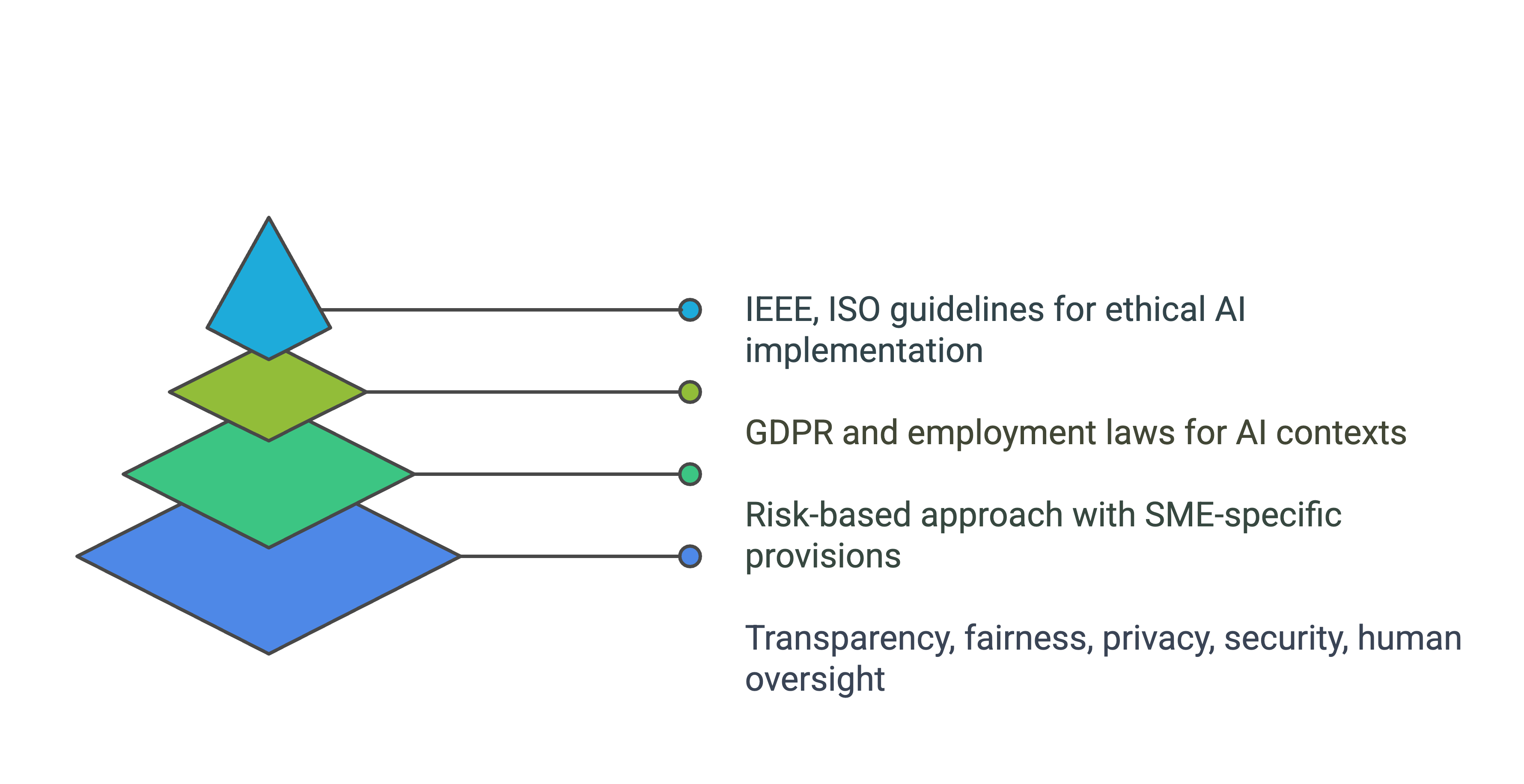
The European Union’s AI Act represents the most comprehensive regulatory framework globally, establishing a risk-based approach that assigns obligations proportional to the potential harm specific AI applications might cause. The legislation classifies AI systems into risk categories, with correspondingly stringent requirements for higher-risk applications. For office environments, relevant provisions include those addressing workplace monitoring, automated decision-making in employment contexts, and processing of personal data. Importantly, the Act includes specific provisions for SMEs, including simplified documentation requirements, free access to regulatory sandboxes, and proportionate compliance costs scaled to organizational size.
Beyond comprehensive frameworks like the EU AI Act, organizations must consider domain-specific regulations that intersect with AI implementation. Data protection laws like GDPR in Europe and various state-level privacy regulations in the United States establish requirements for processing personal information, including obligations around consent, purpose limitation, data minimization, and individual rights. Employment laws in many jurisdictions address issues like algorithmic hiring, workplace monitoring, and automated performance evaluation. Consumer protection regulations may apply to AI systems that interact with customers or process consumer data.
Industry standards and self-regulatory frameworks complement formal legislation in shaping responsible AI governance. Organizations like the IEEE, ISO, and various industry associations have developed standards addressing technical aspects of AI systems as well as ethical implementation considerations. While often voluntary, these standards increasingly influence both regulatory development and market expectations, making familiarity with relevant frameworks valuable for forward-looking organizations.
For SMEs, proportionate compliance approaches are essential. Rather than establishing comprehensive AI governance systems that might burden smaller organizations, focusing on core principles like transparency, fairness, privacy, security, and human oversight provides a foundation for responsible implementation. Documentation of AI-related decisions and processes, even in simplified formats, supports both compliance efforts and organizational learning. Leveraging guidance materials specifically developed for smaller organizations – such as those increasingly provided by regulatory authorities and industry bodies – can help navigate complex requirements with limited resources.
Case Studies: Successful AI Integration in Small and Medium Enterprises
Examining concrete examples of successful AI implementations in SMEs provides valuable insights into practical strategies and realizable benefits. These case studies demonstrate how smaller organizations can effectively leverage AI capabilities despite resource constraints, offering models that other businesses might adapt to their specific contexts.
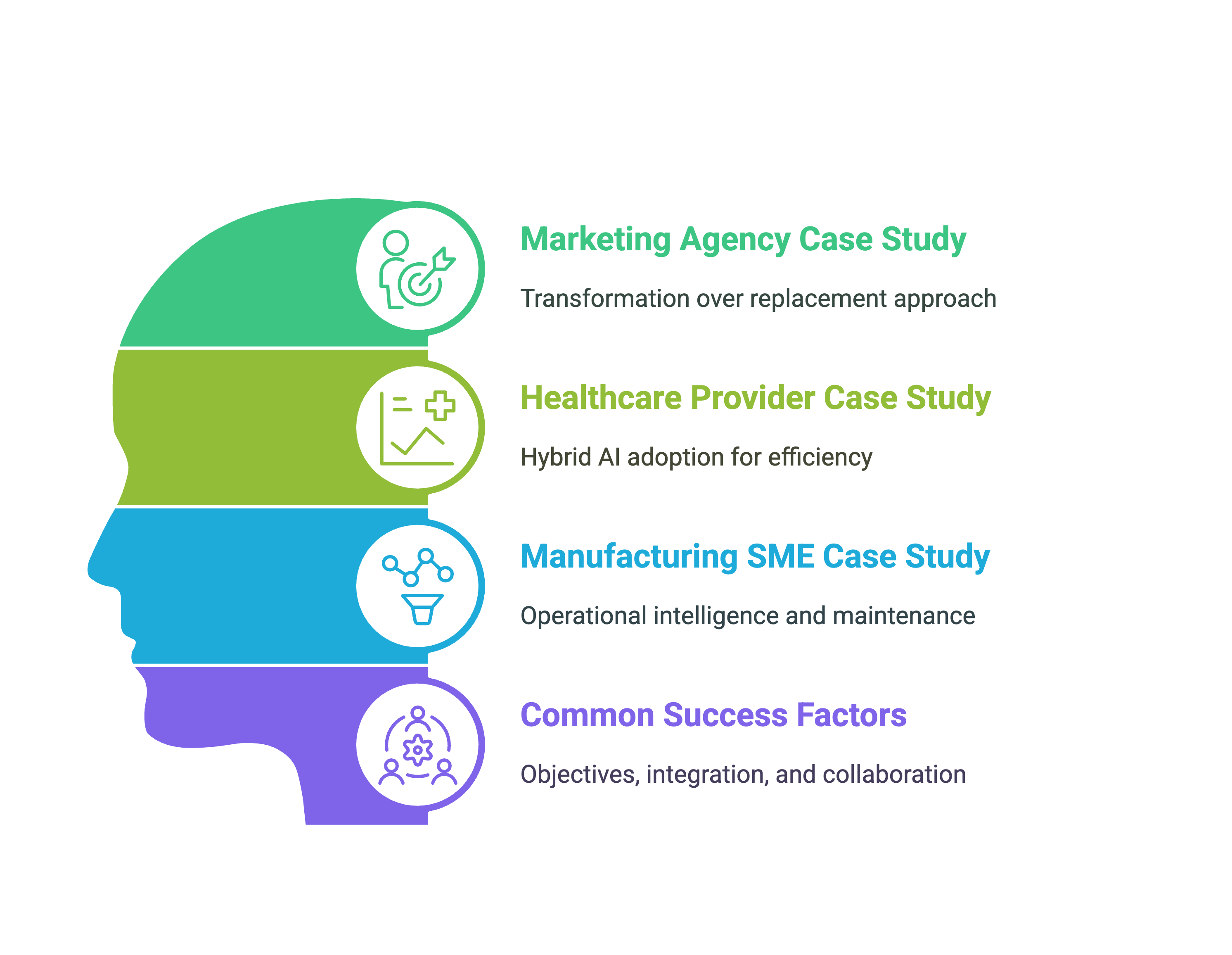
A medium-sized marketing agency in Utrecht, Netherlands exemplifies the “transformation rather than replacement” approach to AI integration. Rather than using generative AI tools to reduce headcount in their content team, the company trained writers to become “AI content strategists” – elevating their roles to focus on creativity and strategic direction while using AI for research and initial drafts. This approach delivered multiple benefits: productivity increased by approximately 40%, with teams producing more sophisticated deliverables in less time; employee satisfaction improved as tedious aspects of content creation were automated; and client outcomes enhanced through more consistent quality and faster turnarounds. By involving employees directly in the transformation process and emphasizing role evolution rather than elimination, the company maintained team cohesion while substantially improving operational performance.
A small healthcare provider facing efficiency challenges demonstrates how AI can enhance rather than compromise sensitive service delivery. The organization implemented a hybrid approach to AI adoption, using artificial intelligence for general scheduling and administrative tasks while maintaining human oversight for functions involving sensitive patient information. This strategic delineation allowed the practice to improve operational efficiency without compromising data privacy or the personal connections essential to their care model. Specifically, the AI system handled appointment reminders, basic triage of incoming requests, and preparation of standard documentation, while human staff maintained control of all clinical interactions and decisions requiring medical judgment.
A manufacturing SME illustrates how AI can create competitive advantages through enhanced operational intelligence. The company implemented machine learning systems to analyze production data from their equipment, identifying subtle patterns that human operators had been unable to detect. This implementation revealed previously hidden inefficiencies and allowed predictive maintenance that reduced unexpected downtime by over 30%. Rather than replacing skilled machinists, the AI system became a tool that augmented their capabilities – operators received alerts about potential issues and recommendations for addressing them, but maintained decision authority and applied their practical knowledge to implementation. This collaborative approach not only improved productivity metrics but also enhanced job satisfaction by eliminating frustrating equipment failures.
These examples share several common success factors: clearly defined business objectives driving technology selection; thoughtful integration with existing workflows rather than wholesale process replacement; meaningful employee involvement in implementation decisions; appropriate division of responsibilities between human and artificial intelligence; and iterative approaches that allowed for learning and adjustment throughout the implementation process. They demonstrate that successful AI adoption in SMEs typically focuses on augmenting human capabilities rather than maximizing automation, recognizing that the unique value propositions of smaller businesses often depend heavily on human relationships and flexibility.
Conclusion: Embracing the AI-Powered Future of Office Work
The integration of artificial intelligence into office environments represents not merely a technological shift but a fundamental reimagining of knowledge work. For small and medium enterprises navigating this transformation, the journey involves both substantial challenges and unprecedented opportunities to enhance capabilities, improve outcomes, and potentially redefine competitive landscapes. The evidence suggests that organizations approaching this transition thoughtfully – with attention to human factors alongside technological possibilities – stand to realize significant benefits while mitigating potential downsides.
Several key principles emerge as guidelines for successful AI integration in office settings. First, the most effective implementations focus on transformation rather than replacement – using AI to eliminate routine aspects of roles while elevating human work toward higher-value activities requiring creativity, judgment, and interpersonal connection. Second, organizational transparency and employee involvement in implementation decisions significantly influence both practical outcomes and psychological impacts. Third, systematic investment in workforce capability development – addressing both technical AI literacy and distinctly human skills – proves essential for maximizing collective performance in AI-augmented environments.
For individual office workers, the AI revolution demands proactive adaptation rather than passive response. The evidence consistently indicates that professionals who develop both AI fluency and distinctly human capabilities position themselves for success regardless of how specific roles evolve. Rather than fearing technological change, forward-thinking employees are leveraging AI tools to enhance their own performance while focusing developmental efforts on capabilities that complement rather than compete with machine intelligence. This adaptive mindset represents perhaps the most valuable asset in navigating an inherently uncertain future.
The ultimate vision emerging from this analysis is neither the wholesale automation of office functions nor the preservation of traditional work arrangements. Instead, it suggests a third path: the development of increasingly sophisticated human-AI collaborations that leverage the complementary strengths of each. In this future, artificial intelligence handles increasingly complex routine elements of knowledge work – information processing, pattern recognition, content generation, and procedural workflows – while human workers focus on areas where they maintain comparative advantages: contextual understanding, ethical judgment, creative innovation, and authentic human connection.
For SMEs specifically, this collaborative future offers particularly promising possibilities. By strategically implementing AI solutions that address their specific challenges and opportunities, smaller organizations can potentially overcome historical resource disadvantages relative to larger competitors. The democratization of powerful capabilities through accessible AI tools may enable a new era of SME competitiveness and innovation – provided these organizations approach the AI revolution not merely as a technological challenge but as a comprehensive transformation of how they create and deliver value in an increasingly digital world.
Frequently Asked Questions: The Future of Office Workers in the AI Era
How quickly are SMEs adopting AI technologies, and what factors are slowing their implementation?
Despite the significant media attention surrounding AI, actual adoption rates among small and medium enterprises remain relatively modest. Current data indicates that only about 15% of SME leaders are utilizing generative AI tools, with just 3% reporting regular usage and 12% occasional implementation. This represents a significant increase from the 5% adoption rate observed in early 2023, yet indicates that the vast majority of small and medium businesses have yet to meaningfully incorporate AI into their operations. Several factors explain this cautious approach. The primary obstacle appears to be difficulty identifying concrete applications relevant to specific business contexts, with 71% of non-adopting SME leaders reporting they simply don’t see relevant use cases for their businesses. Additional barriers include perceived implementation costs, concerns about integration with existing systems, data quality issues, and skills gaps within current teams. Adoption also varies considerably across sectors, with service-oriented businesses (24%) more readily implementing AI solutions compared to sectors like construction (4%) or transportation (5%). This sectoral variation reflects differing digital readiness levels and varying applicability of current AI solutions to specific business activities.
What tangible productivity benefits are SMEs experiencing when they successfully implement AI solutions?
SMEs that successfully implement AI solutions are reporting substantial productivity enhancements across multiple dimensions. Research indicates that generative AI can deliver productivity gains of up to six hours per week for office workers – effectively freeing more than half a day of working time for higher-value activities. These gains materialize through several mechanisms: automation of repetitive administrative tasks (like data entry, appointment scheduling, and basic correspondence); acceleration of knowledge work through instant information retrieval, document generation, and data summarization; and extension of productive capacity beyond traditional working hours through systems that can operate continuously. For resource-constrained SMEs, these efficiency improvements can be transformative, allowing smaller teams to accomplish significantly more without proportional increases in headcount or expenses. Case studies demonstrate productivity improvements ranging from 25-40% for specific functions, with marketing content creation, customer service, financial reporting, and administrative coordination showing particularly impressive gains. Beyond raw productivity metrics, SMEs report qualitative improvements including reduced error rates, faster response times to customer inquiries, more consistent quality in deliverables, and enhanced employee satisfaction as tedious aspects of roles are automated, allowing focus on more engaging work.
How are the skill requirements for office workers changing in response to increasing AI capabilities?
The skill landscape for office workers is undergoing a profound transformation in response to advancing AI capabilities. We’re witnessing a two-directional shift: increasing demand for technical AI literacy alongside greater appreciation for uniquely human capabilities. On the technical side, professionals across virtually all office functions now require foundational understanding of AI concepts, capabilities and limitations; familiarity with relevant AI tools and platforms; basic prompt engineering abilities for generative systems; and awareness of data considerations affecting AI performance. Professionals are now more than twice as likely to add AI skills to their profiles compared to 2018, with dramatic increases observed even in fields not traditionally associated with technology. Simultaneously, as AI systems handle an increasing share of structured, routine tasks, distinctly human capabilities have become more valuable. Skills like emotional intelligence, creative problem-solving, ethical judgment, and interpersonal communication have appreciated by approximately 20% since 2018. The overall skill profile of effective office workers is expanding significantly – professionals are currently adding a 40% broader skillset to their profiles than they did just a few years ago. This evolution requires continuous learning, with 76% of employees expressing desire for formal training in effective AI utilization.
What are the main psychological concerns office workers have about AI implementation, and how do these vary across different groups?
AI implementation generates significant psychological responses among office workers, with concerns varying notably across demographic and occupational segments. Research indicates that 38% of employees worry about AI potentially making their jobs obsolete, with this “AI anxiety” correlating strongly with negative mental health outcomes – 51% of employees concerned about AI report that work negatively impacts their mental health, compared to 29% of those without such concerns. Age appears to be a significant factor influencing these perceptions, with younger workers demonstrating heightened concern about AI’s impact on employment stability. Approximately 53% of workers under 25 express fear that AI might threaten their positions, compared to 42% among workers over 55. This generational disparity likely reflects younger workers’ longer future career horizons and potentially greater awareness of AI’s rapidly expanding capabilities. Beyond job security concerns, employees express anxiety about adapting to new technologies, potentially increased workplace monitoring, changing performance expectations, and skills obsolescence. Psychological impacts also vary by implementation approach – when AI systems are positioned as tools enhancing human capabilities rather than replacing human workers, they typically encounter less resistance and anxiety. Similarly, involving employees in implementation decisions significantly reduces apprehension by establishing a sense of agency rather than vulnerability.
What models of human-AI collaboration are emerging, and which appear most promising for SMEs?
Rather than wholesale replacement of human workers, the most promising future workplace scenarios involve sophisticated collaboration models leveraging the complementary strengths of human and artificial intelligence. Several collaboration patterns are emerging with particular relevance for SMEs. The “AI-as-assistant” model positions AI systems as support tools that handle routine elements of roles while human workers maintain direction and oversight. This approach proves particularly effective for knowledge worker roles in smaller organizations, where employees typically juggle diverse responsibilities. The “team-of-specialists” model envisions humans working alongside multiple AI agents, each with specialized capabilities designed for particular tasks or domains. This arrangement mirrors how professionals currently collaborate with human specialists, creating a familiar organizational structure enhanced by AI capabilities. For customer-facing functions, the “human-in-the-loop” model allows AI systems to handle standard interactions while routing complex scenarios to human staff, maximizing efficiency while maintaining quality in exceptional situations. For SMEs, the most successful implementations typically emphasize complementarity – deploying AI for tasks where it excels (data processing, pattern recognition, routine communications) while positioning human workers to focus on relationship management, creative problem-solving, strategic decision-making, and ethical oversight.
Will AI primarily transform office jobs or eliminate them, and which roles face the greatest displacement risk?
The evidence suggests a more nuanced outcome than either wholesale job preservation or elimination, with AI driving significant job transformation while causing more selective displacement concentrated in specific functions. Approximately 40% of global jobs could be “affected” by AI according to IMF estimates, but being affected doesn’t necessarily mean elimination. The transformation effects are already visible across numerous office functions – administrative roles evolving from primarily executing routine tasks to managing exceptions and relationships; marketing positions shifting from content production toward strategic direction; customer service transitioning from handling standard inquiries to addressing complex problems. For individual office workers, the critical factor determining vulnerability appears to be the composition of their role – specifically, the proportion of time spent on routine, predictable tasks versus activities requiring creativity, emotional intelligence, ethical judgment, or complex problem-solving. Roles heavily weighted toward the former category face greater displacement risk. Particularly vulnerable functions include data entry, basic bookkeeping, routine customer service, standard content production, and administrative coordination. Conversely, roles centered on relationship management, creative ideation, complex problem-solving, ethical oversight, and strategic direction appear more complementary to AI capabilities and thus more resistant to automation.
What strategies should SMEs employ to effectively train their workforce for an AI-augmented workplace?
Successfully preparing employees for AI integration requires multifaceted training strategies that address both technical competencies and adaptive capabilities. For resource-constrained SMEs, several approaches prove particularly effective. First, implementing a structured skills development framework helps address diverse learning needs systematically – beginning with organizational needs assessment, providing foundational knowledge through accessible resources, engaging with subject matter experts where required, and emphasizing practical application in actual work contexts. Second, cultivating technical AI literacy should focus on immediately applicable skills: understanding AI fundamentals, developing proficiency with relevant AI tools, mastering basic prompt engineering techniques, and recognizing data considerations affecting results. Third, equally emphasizing distinctly human capabilities ensures employees develop complementary rather than competitive skills: creative problem-solving, ethical reasoning, emotional intelligence, adaptive learning, and systems thinking. Given limited training resources, SMEs should leverage collaborative approaches including industry associations, educational institutions, government programs, and vendor-provided resources. The most successful implementations typically combine formal training with “learn-by-doing” approaches that integrate learning into actual implementation projects. Finally, creating internal knowledge-sharing mechanisms – including peer mentoring, regular showcases of effective applications, and communities of practice around specific AI tools – helps maximize organizational learning without extensive formal training infrastructure.
What are the key ethical considerations when implementing AI in office environments, and how can SMEs address them?
Ethical AI implementation requires attention to several critical dimensions, even for smaller organizations with limited resources. Data privacy represents a fundamental concern when implementing office-focused AI systems, requiring careful consideration of what information these systems access, how it’s secured, and whether employee and customer privacy expectations are respected. Algorithmic bias presents another significant challenge – AI systems trained on historical data may perpetuate existing workplace biases, potentially creating discriminatory outcomes in hiring, promotion, performance evaluation, or work assignment. SMEs should regularly test for differential impacts across demographic groups and maintain human oversight of consequential decisions. The impact on workforce wellbeing constitutes a third major ethical dimension – implementing AI in ways that intensify work pace, increase surveillance, reduce autonomy, or create unrealistic performance expectations can negatively affect employee mental health and satisfaction. For SMEs, proportionate ethics approaches are essential. This might include developing straightforward ethical guidelines for AI use, establishing lightweight review processes for new implementations, providing channels for employee feedback, and regularly evaluating both intended and unintended consequences. Creating clear boundaries around appropriate AI use cases – for instance, distinguishing between acceptable automation of routine tasks versus problematic automated decision-making affecting careers – helps establish ethical guardrails without excessive bureaucracy. Finally, promoting a culture of ethical mindfulness, where employees at all levels consider potential ethical implications before implementing new AI applications, creates distributed responsibility for ethical outcomes.
What specific AI applications are delivering the most immediate value for SMEs in office settings?
Several AI applications are demonstrating particular value for SMEs in office environments, delivering substantial benefits with relatively straightforward implementation. Document processing solutions that extract information from invoices, receipts, contracts and forms can reduce manual data entry by 80-90%, dramatically improving processing times while reducing errors. Customer service augmentation tools that provide real-time guidance to human agents, suggest responses to common inquiries, and handle basic customer interactions deliver immediate efficiency gains while maintaining service quality. Meeting assistance technologies that automatically record, transcribe, summarize and extract action items from conversations save valuable time for employees attending numerous meetings. Marketing content generation systems help smaller organizations maintain consistent content production across multiple channels without proportional staffing increases. Financial analysis tools that identify patterns in business data, forecast cash flow requirements, and flag unusual transactions provide smaller organizations with analytical capabilities previously available only to larger enterprises with dedicated financial analysts. Administrative automation systems that handle appointment scheduling, email categorization, and basic correspondence management free administrative staff to focus on higher-value coordination activities. These applications share common characteristics explaining their effectiveness in SME contexts: they address clearly defined pain points, integrate relatively easily with existing workflows, require limited customization, demonstrate rapid return on investment, and augment rather than replace human capabilities.
Looking ahead, how will the relationship between office workers and AI likely evolve over the next decade?
The coming decade will likely see increasingly sophisticated human-AI collaborations rather than wholesale automation of office functions. As AI capabilities advance, the division of labor will continue evolving – AI systems will handle progressively more complex analytical and procedural tasks, while human workers focus increasingly on areas requiring creativity, judgment, interpersonal skills, and ethical reasoning. Interface technologies will mature significantly, moving beyond today’s predominantly text-based interactions toward multimodal systems incorporating voice, vision, and potentially spatial computing elements. This will make human-AI collaboration more intuitive and reduce current friction points in knowledge worker workflows. AI systems will increasingly function as “virtual teammates” rather than tools, with specialized capabilities designed for particular functions and domains. For office workers, continuous adaptation will become the defining professional requirement – not merely learning specific technologies but developing meta-skills for effective collaboration with intelligent systems. Organizations will increasingly evaluate employees not on technical execution (increasingly handled by AI) but on their ability to direct, validate, contextualize, and ethically apply AI-generated outputs. The most successful professionals will be those who leverage AI to amplify their distinctly human capabilities rather than competing with machines on routine cognitive tasks. This evolution represents not the end of office work but its transformation into something potentially more creative, strategic and meaningful than many of today’s predominantly administrative functions.